


How Our Roof Repair in Great Neck Process Works
Leaks that only show up in wind are the hardest to find. You cannot just look for the stain and patch above it. So our process for the peninsula is built around one goal: finding the exact spot the wind pushes water in, then sealing it for good with real metal and proper nailing.
We start with questions. Does it drip only when wind blows from the northeast? Only in heavy rain? Only near the skylight? Your answers point us to the right side of the house before we climb a single ladder, which saves hours on a big roof.
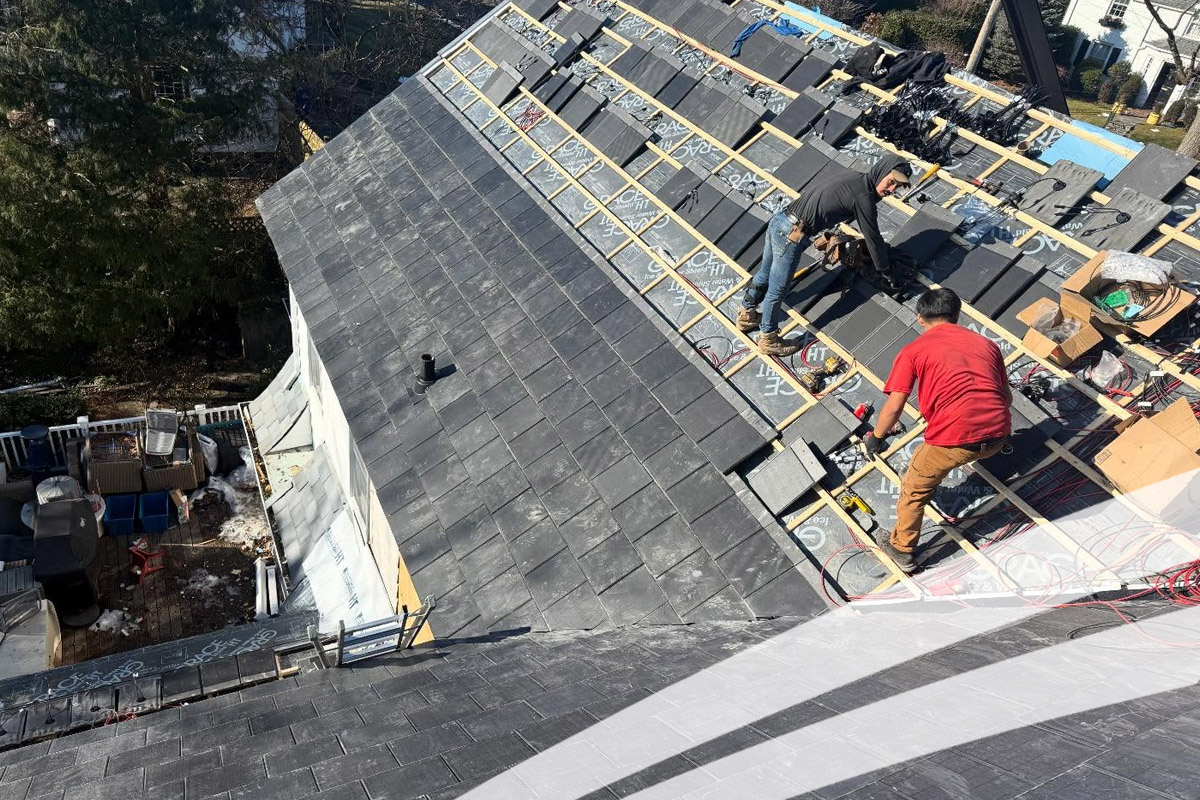
Then we walk each slope, valley, dormer cheek, turret base and chimney. On slate, cedar or tile we use roof hooks and ladders so we never crack what is still good. We go through the attic with a moisture meter, too, to find damp wood before it shows on a ceiling.
After that, we run a hose on the side that faces the Sound or the bay, one section at a time, while someone watches inside. It is slow work, but it shows exactly where wind-driven rain gets past the flashing, dormer siding or skylight curb.
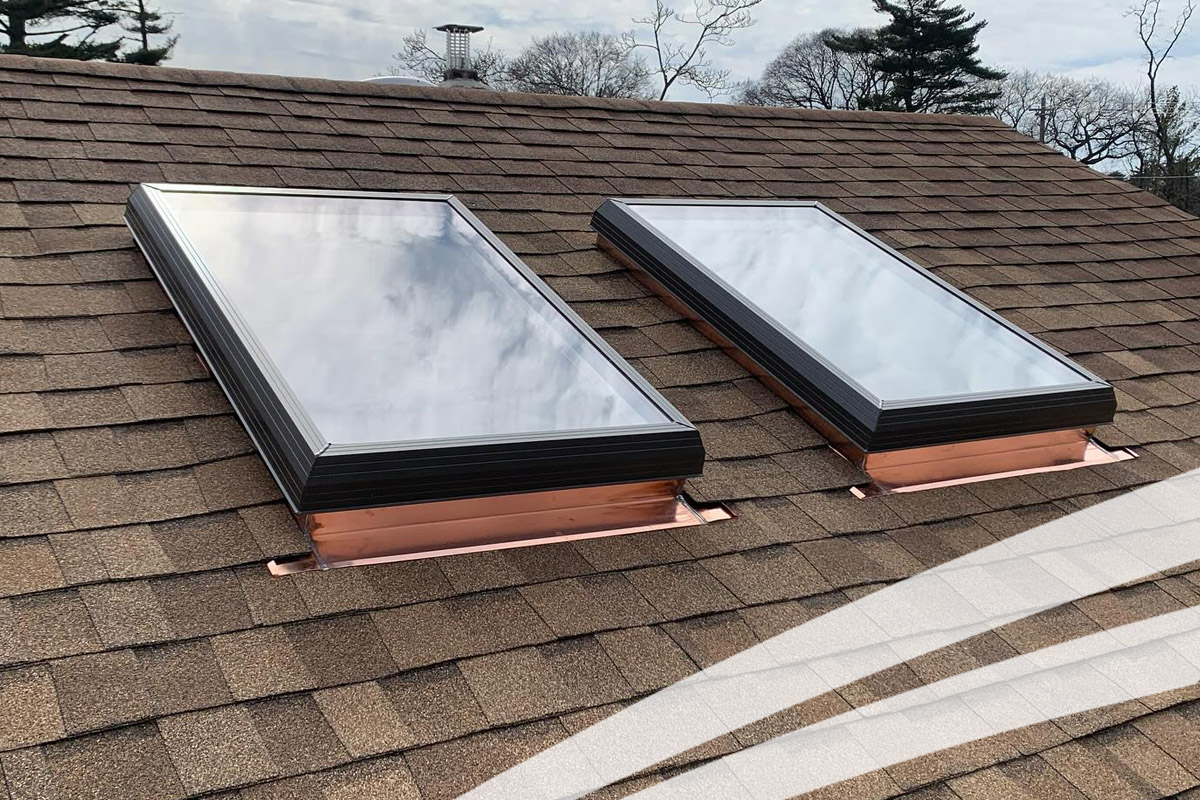
Then we make the repair: new valley metal, step flashing and counterflashing at dormers, and new skylight flashing kits. Shingles get high-wind nailing and a hand-seal. Slate and cedar get matched pieces, not tar patches.
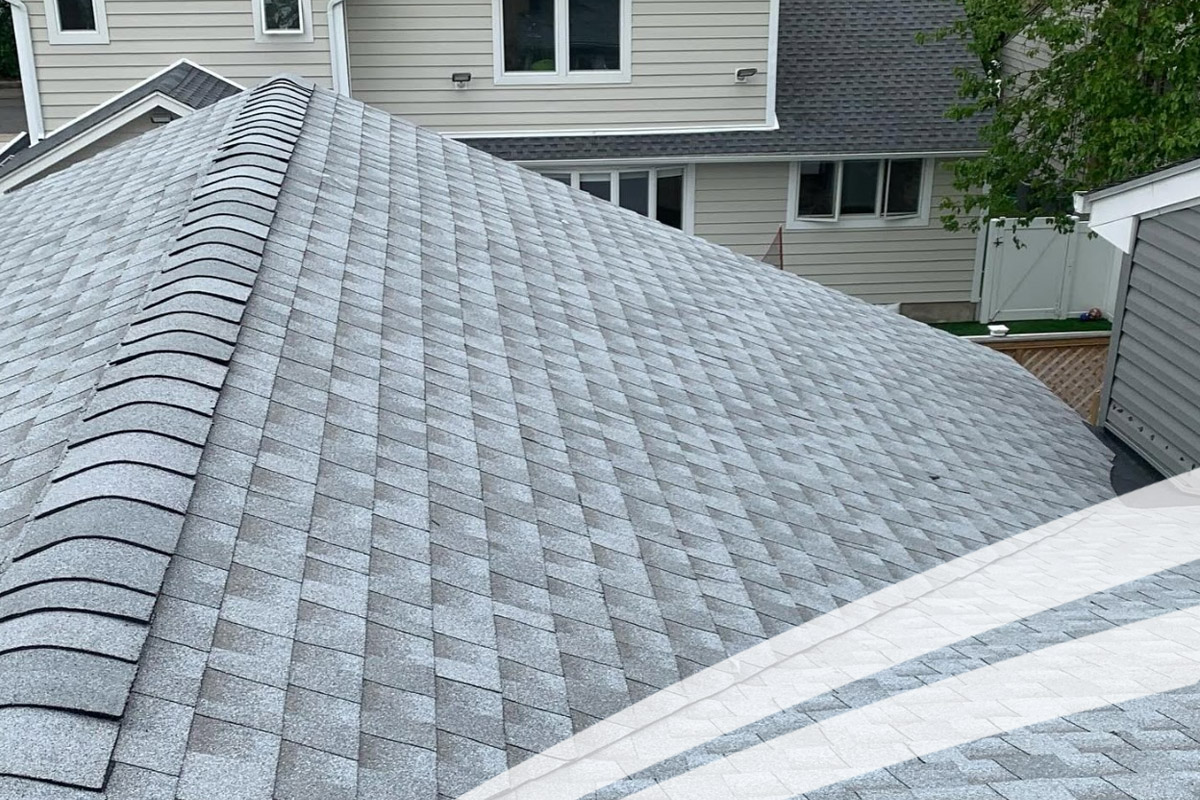
When the work is done, we show you before and after photos of every spot we fixed and clean the grounds of nails and scrap. After the next big storm, we come back if you ask and check the attic with you to confirm it stayed dry.