Flat Roof Materials Compared
Choosing the right flat roof materials is one of the most important decisions a property owner can make. The three dominant flat roof materials on the market today are TPO (thermoplastic polyolefin), EPDM (ethylene propylene diene monomer), and modified bitumen, and each one offers a distinct balance of cost, durability, energy efficiency, and maintenance requirements. Aaron Roofing Corp has installed all three systems across Nassau County and Suffolk County for over 15 years, and our experience shows that no single material is best for every building. This guide compares flat roof materials side by side so you can make an informed choice for your Long Island property.
Whether you own a commercial building in Hempstead, a multi-family property in Freeport, or a home with a flat or low-slope section in Garden City or Mineola, understanding how flat roof materials perform in Long Island’s coastal climate is essential to getting the longest life and the best return on your investment.
Flat Roof Materials at a Glance: TPO vs. EPDM vs. Modified Bitumen
Before diving into the details, here is a high-level comparison of the three main flat roof materials. This table summarizes the key metrics that drive most purchasing decisions:
| Feature | TPO | EPDM | Modified Bitumen |
|---|---|---|---|
| Cost per sq ft (installed) | $5 – $7 | $4 – $6 | $4 – $8 |
| Lifespan | 20 – 30 years | 25 – 30 years | 15 – 25 years |
| Seam method | Heat-welded | Adhesive / tape | Torch, cold adhesive, or self-adhered |
| Energy efficiency | Excellent (white, reflective) | Low (black, absorbs heat) | Moderate (varies by cap sheet) |
| Puncture resistance | Moderate | Low to moderate | High (multi-layer) |
| Repair difficulty | Moderate (requires heat welder) | Easy (patch and adhesive) | Moderate |
| Best for | Energy-conscious buildings | Budget-conscious, proven reliability | High-traffic roofs, small areas |
TPO: The Energy-Efficient Flat Roof Material
TPO has become the fastest-growing flat roof material in the United States over the past two decades, and for good reason. Its white, reflective surface reduces cooling costs by keeping the roof surface significantly cooler than dark-colored alternatives. On Long Island, where summer temperatures regularly push cooling systems to their limits, TPO’s reflective properties translate directly into lower utility bills.
TPO Advantages
Superior seam strength. TPO seams are heat-welded, which creates a continuous waterproof bond that is actually stronger than the membrane itself. This makes TPO one of the most watertight flat roof materials available, and it is why many commercial property owners on Long Island choose TPO for large-footprint buildings where seam failure would be costly.
Energy savings. According to the U.S. Department of Energy, cool roofing materials like TPO can reduce roof surface temperatures by up to 50 degrees Fahrenheit compared to dark membranes. Property owners in Long Island typically see cooling cost reductions of 10 to 30 percent after switching to TPO from dark flat roof materials. Over the 20 to 30 year lifespan of a TPO system, these savings accumulate to thousands of dollars.
Chemical and UV resistance. TPO resists damage from oils, animal fats, and many industrial chemicals that can degrade other flat roof materials. Its UV resistance prevents the membrane from becoming brittle over time, which is important in Long Island’s sun-and-salt environment.
TPO Disadvantages
Quality variation. TPO is a relatively newer material compared to EPDM, and manufacturing quality varies between producers. Some lower-cost TPO formulations have shown premature failure at the 10 to 15 year mark. Aaron Roofing Corp uses only premium-grade TPO from established manufacturers to ensure the full 20 to 30 year lifespan is achieved.
Installation expertise required. Heat-welding TPO seams requires specialized equipment and trained technicians. Improper welds cause wrinkles, fish-mouths, and seam separations that lead to leaks. This is one of the most critical distinctions among flat roof materials: TPO is only as good as the crew installing it.
Not ideal for foot traffic. Standard TPO membranes are thinner than modified bitumen systems and can be punctured by heavy equipment, tools, or repeated foot traffic. Buildings with rooftop HVAC units or other equipment that requires frequent maintenance access may need walkway pads over TPO to prevent damage.
EPDM: The Proven, Budget-Friendly Flat Roof Material
EPDM rubber roofing has been protecting flat and low-slope buildings for more than 60 years, giving it the longest proven track record of any single-ply flat roof material. Its black rubber membrane is flexible, affordable, and remarkably durable in extreme temperature swings, making it a reliable choice for Long Island’s variable climate.
EPDM Advantages
Proven longevity. EPDM flat roof materials routinely last 25 to 30 years, with many installations exceeding 40 years when properly maintained. This track record gives property owners confidence that is difficult to match with newer flat roof materials.
Extreme temperature flexibility. EPDM remains flexible in temperatures ranging from minus 40 to plus 300 degrees Fahrenheit. It does not crack, split, or become brittle during Long Island’s freeze-thaw cycles the way some other flat roof materials can. This flexibility is especially valuable for buildings that experience thermal movement.
Easiest and most affordable repairs. EPDM patches and repairs require only adhesive and a patch kit, no specialized welding equipment. A building maintenance crew can handle minor EPDM repairs without calling a roofing contractor, which reduces long-term maintenance costs. Among all flat roof materials, EPDM has the lowest repair cost and simplest repair process.
Lowest installed cost. At $4 to $6 per square foot, EPDM is the most budget-friendly option among commercial-grade flat roof materials. For property owners who need to cover large square footage without exceeding budget, EPDM delivers reliable protection at the lowest upfront price.
EPDM Disadvantages
Heat absorption. EPDM’s black surface absorbs solar energy, which can push rooftop temperatures well above ambient and increase cooling costs during Long Island summers. White EPDM is available but costs more and has a shorter track record than white TPO.
Adhesive seam vulnerability. Unlike TPO’s heat-welded seams, EPDM seams rely on adhesive tape that can weaken over time, particularly in areas with standing water or heavy UV exposure. Seam maintenance is the most common ongoing expense with EPDM flat roof materials.
Puncture susceptibility. EPDM membranes are vulnerable to puncture from sharp objects, fallen branches, and foot traffic. In wooded areas of Long Island where debris accumulates on roofs, this vulnerability requires regular inspection and prompt repair.
Modified Bitumen: The Heavy-Duty Flat Roof Material
Modified bitumen is a multi-layered asphalt-based system that has been used on commercial and residential flat roofs for over 40 years. Its layered construction provides the highest puncture resistance of any flat roof material, making it the preferred choice for roofs that see regular foot traffic or support heavy equipment.
Modified Bitumen Advantages
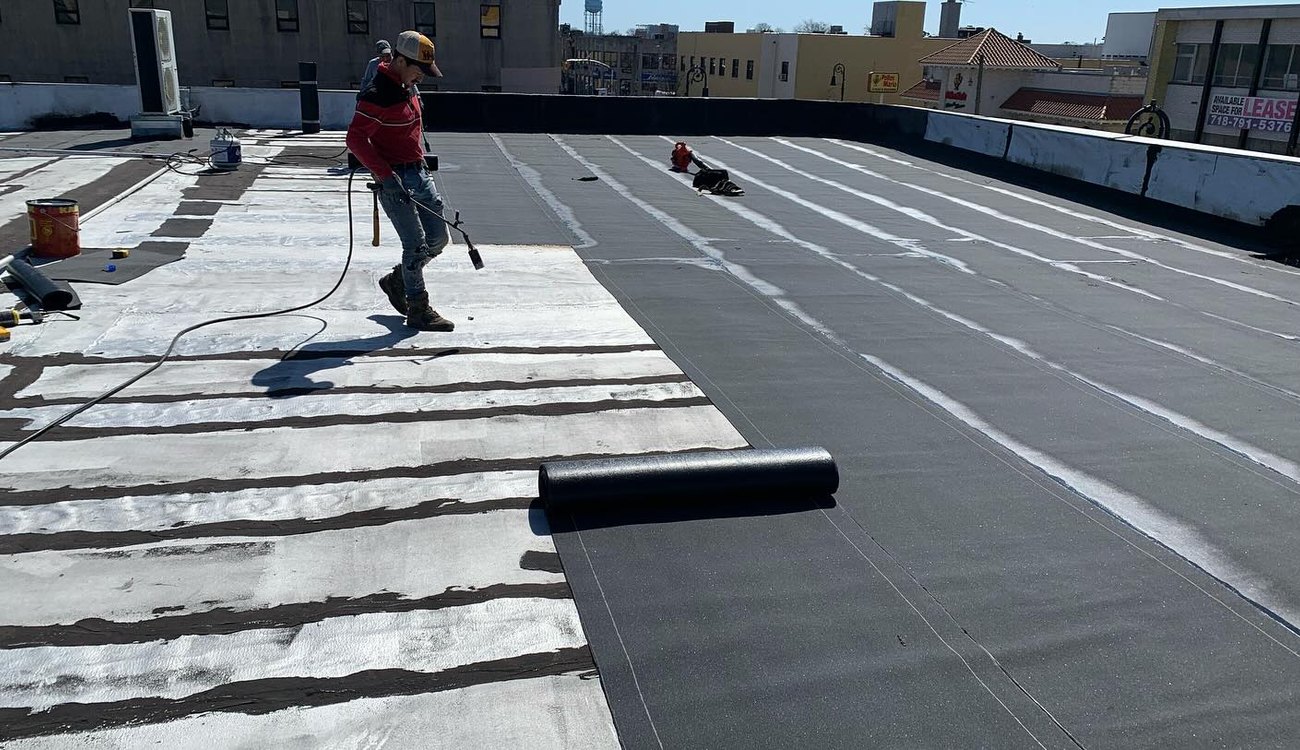
Superior puncture resistance. The multi-layer design of modified bitumen means that even if the top layer is damaged, the underlying layers continue to protect the building. This redundancy makes modified bitumen one of the most forgiving flat roof materials for buildings with rooftop units, solar arrays, or maintenance walkways.
Climate versatility. Modified bitumen performs well across a wide range of climates. On Long Island, it handles both summer heat and winter freeze-thaw without the cracking that can affect single-ply membranes at the end of their lifespan.
Multiple installation methods. Modified bitumen can be installed using torch application, cold adhesive, or self-adhered sheets. Cold adhesive and self-adhered methods eliminate the fire risk associated with torch-down installation, making them suitable for occupied buildings and structures where open flame is prohibited.
Modified Bitumen Disadvantages
Shorter lifespan. At 15 to 25 years, modified bitumen has the shortest expected lifespan among the three main flat roof materials. High-quality installations with premium cap sheets can reach 25 to 30 years, but the average falls below TPO and well below EPDM.
Weight. Modified bitumen is the heaviest flat roof material, which can require structural reinforcement on older buildings. Before installing modified bitumen, a structural assessment may be necessary, adding to the overall project cost.
Higher labor costs. Installation is more labor-intensive than TPO or EPDM, particularly for torch-down applications. This drives up the total installed cost, especially for large commercial roofs where labor hours accumulate quickly.
Choosing the Right Flat Roof Materials for Long Island Properties
Selecting the best flat roof materials for your Long Island building depends on several property-specific factors:
Building use and foot traffic. If your roof supports HVAC equipment, satellite dishes, or solar panels that require regular maintenance access, modified bitumen’s puncture resistance is the strongest advantage. For roofs with minimal traffic, TPO or EPDM deliver longer life at lower weight.
Energy priorities. If reducing cooling costs is a primary goal, TPO is the clear winner among flat roof materials. Its reflective white surface can cut cooling costs by 10 to 30 percent, and it may qualify for utility rebates and ENERGY STAR certification.
Budget constraints. EPDM offers the lowest upfront cost and the simplest repairs. For property owners who need coverage now and plan to maintain the roof attentively, EPDM provides the best value per dollar spent on flat roof materials.
Long-term ownership. If you plan to hold the property for 25 or more years, TPO or EPDM’s longer lifespan reduces the total number of replacements over your ownership period. Modified bitumen may require a replacement within that window, increasing lifetime costs.
Local building codes. Some Long Island municipalities have adopted cool roof requirements for commercial buildings. TPO satisfies these requirements by default. If your property falls under a cool roof mandate, TPO may be the only viable option among standard flat roof materials.
Flat Roof Materials: Cost Comparison for Long Island
The total cost of a flat roof installation depends on the material, the roof size, accessibility, and any tear-off requirements. Here is what Long Island property owners can expect in 2026:
| Material | Cost per Sq Ft (Installed) | Total Cost (2,000 sq ft roof) | 25-Year Total Cost* |
|---|---|---|---|
| EPDM | $4 – $6 | $8,000 – $12,000 | $8,000 – $14,000 |
| TPO | $5 – $7 | $10,000 – $14,000 | $10,000 – $14,000 |
| Modified Bitumen | $4 – $8 | $8,000 – $16,000 | $12,000 – $24,000 |
*25-year total includes estimated maintenance and one potential replacement for modified bitumen.
Tear-off of existing flat roof materials adds $1.50 to $3.00 per square foot to any of these options. Multi-layer tear-offs cost more due to disposal fees. Aaron Roofing Corp includes tear-off, disposal, and new installation in every flat roof estimate, so there are no surprise charges.
Flat Roof Materials: Maintenance and Inspection Tips
Regardless of which flat roof materials you choose, a consistent maintenance routine extends the life of your system and prevents expensive emergency repairs. Long Island’s combination of coastal humidity, nor’easters, and summer storms makes proactive maintenance even more critical than in inland areas.
Inspect twice per year. Schedule a professional inspection in the spring after winter weather has passed and again in the fall before the freeze-thaw season begins. For flat roof materials of any type, early detection of seam separation, membrane blistering, or flashing deterioration saves thousands in repair costs.
Clear drains and scuppers after every storm. Flat roofs rely on drainage systems to prevent ponding water. Leaves, granules, and debris from nor’easters can clog drains within a single storm event. Standing water accelerates the deterioration of all flat roof materials and adds weight that can stress the roof structure.
Remove debris promptly. Fallen branches, construction materials, and even accumulated leaves can puncture membranes or trap moisture against the surface. This is especially important for EPDM and TPO flat roof materials, which are more susceptible to puncture than multi-layer modified bitumen.
Document conditions photographically. Keep a photo log of your roof’s condition at each inspection. This documentation supports insurance claims if storm damage occurs and helps your roofing contractor track the rate of wear over time.
Address repairs immediately. A small tear or seam gap in any flat roof material becomes a major problem within one or two rain cycles. The cost of a prompt repair is typically $150 to $500, while the water damage from a delayed repair can run into the thousands.
Why Aaron Roofing Corp for Flat Roof Materials on Long Island
Aaron Roofing Corp is a dedicated flat roofing contractor serving Nassau County and Suffolk County. Owner Aaron Bravo personally inspects every flat roof project and recommends flat roof materials based on the building’s specific conditions, not a one-size-fits-all formula. Our crews are trained and certified in TPO heat welding, EPDM adhesive application, and modified bitumen installation, so we deliver each system at the highest standard.
We carry full liability insurance and workers’ compensation, use materials from top manufacturers backed by comprehensive warranties, and provide written workmanship guarantees. Explore our project gallery to see completed flat roof installations across Long Island, or read how our step-by-step process keeps every project on schedule and on budget.
For a free flat roof inspection and material recommendation, call (516) 343-0382 or visit our contact page.
Frequently Asked Questions About Flat Roof Materials
What are the best flat roof materials for Long Island buildings?
The best flat roof materials depend on your building’s needs. TPO is ideal for energy efficiency and new construction. EPDM offers proven longevity and the lowest cost. Modified bitumen provides the best puncture resistance for high-traffic roofs. All three perform well on Long Island when installed by an experienced flat roofing contractor.
How long do flat roof materials last?
TPO flat roof materials last 20 to 30 years, EPDM lasts 25 to 30 years (some installations exceed 40 years), and modified bitumen lasts 15 to 25 years. Lifespan depends on material quality, installation skill, and maintenance frequency. Long Island’s salt air and freeze-thaw cycles make professional installation and regular inspections especially important for maximizing lifespan.
Which flat roof materials are the most energy efficient?
TPO is the most energy-efficient flat roof material because its white reflective surface reduces cooling costs by 10 to 30 percent. EPDM’s black surface absorbs heat, increasing cooling costs in summer. White EPDM and reflective cap sheets for modified bitumen are available but cost more and have shorter performance histories than TPO.
Can flat roof materials handle Long Island winters?
All three flat roof materials handle Long Island winters when properly installed. EPDM is the most flexible in extreme cold and resists cracking during freeze-thaw cycles. TPO performs well but requires quality formulation to avoid cold-weather brittleness. Modified bitumen’s multi-layer design provides natural insulation and resists ice damage.
How much does it cost to replace a flat roof on Long Island?
Replacing a flat roof on Long Island costs $4 to $8 per square foot depending on the material chosen. A 2,000-square-foot flat roof costs $8,000 to $16,000 installed, including tear-off and disposal. TPO falls in the middle at $10,000 to $14,000 for the same area. Labor rates in Nassau County run slightly higher than Suffolk County due to higher costs of operating in the area.
Do flat roof materials require regular maintenance?
All flat roof materials benefit from annual inspections and regular maintenance. Key maintenance tasks include clearing debris and standing water, inspecting and resealing seams, checking flashing at walls and penetrations, and ensuring drains and scuppers are clear. Regular maintenance extends the life of any flat roof material by 5 to 10 years and catches small issues before they become costly repairs. Aaron Roofing Corp offers maintenance programs for commercial and residential flat roofs across Long Island.