How to Fix a Roof Leak in Long Island Before It Causes Serious Damage
A roof leak rarely stays small. What starts as a dark spot on the ceiling or a slow drip after a heavy rain is almost always a sign that water has already found a path through your roofing system and is working its way into the structure of your home. By the time the evidence reaches your living space, the moisture has often been traveling through insulation, sheathing, and framing for longer than you might expect. For Long Island homeowners dealing with everything from nor’easters and tropical storm remnants to freeze-thaw cycling through winter, knowing how to fix a roof leak quickly and correctly is one of the most important things you can do to protect your property.
At Aaron Roofing Corp, we serve homeowners across Long Island with fast, professional roof repair backed by thorough inspections and clear, written estimates. Our team is fully licensed and insured, our owner remains involved on every project, and we offer free roof inspections with no obligation. This guide walks you through how to identify a roof leak, what you can do to limit damage in the short term, and why professional repair is almost always the smarter path to a lasting fix.
Why Roof Leaks Happen on Long Island Homes
Long Island’s climate creates a uniquely demanding environment for residential roofing systems. The same coastline that makes the region desirable also delivers salt air that accelerates material degradation, high winds that stress flashing and shingles, and significant annual precipitation that tests every seam and transition in the roofing system. Winter freeze-thaw cycling is particularly damaging. When snow melts and refreezes at the eaves, it forms ice dams that force water under shingles and into the roof structure. Spring brings extended rain events. Summer delivers the occasional tropical system. And fall nor’easters can strip shingles and damage flashing with little warning.
Understanding this context matters when you want to fix a roof leak correctly, because the solution has to account for the cause. A temporary patch applied without identifying the underlying failure mode will not hold up through the next season of weather stress that Long Island reliably delivers.
We believe in transparency, which is why we walk you through our entire step-by-step process from initial inspection to final cleanup.
How to Find Where the Leak Is Coming From
The most frustrating thing about roof leaks is that the visible evidence inside the home almost never points directly to the entry point on the roof. Water travels along rafters, across sheathing, and down structural members before it drips through to create the ceiling stain or attic puddle you discover. The distance between the visible symptom and the actual source can be several feet in any direction.
Start in the Attic
The attic is the most reliable place to begin tracing a roof leak. With a flashlight, inspect the underside of the roof decking for water staining, dark spots, mold growth, or wet insulation. Look for daylight coming through the decking in any spots, which indicates missing or damaged roofing material above. Water stains on rafters or sheathing indicate the direction water has been traveling, which helps you trace the path back toward the actual entry point.
Focus on Roof Transitions and Penetrations
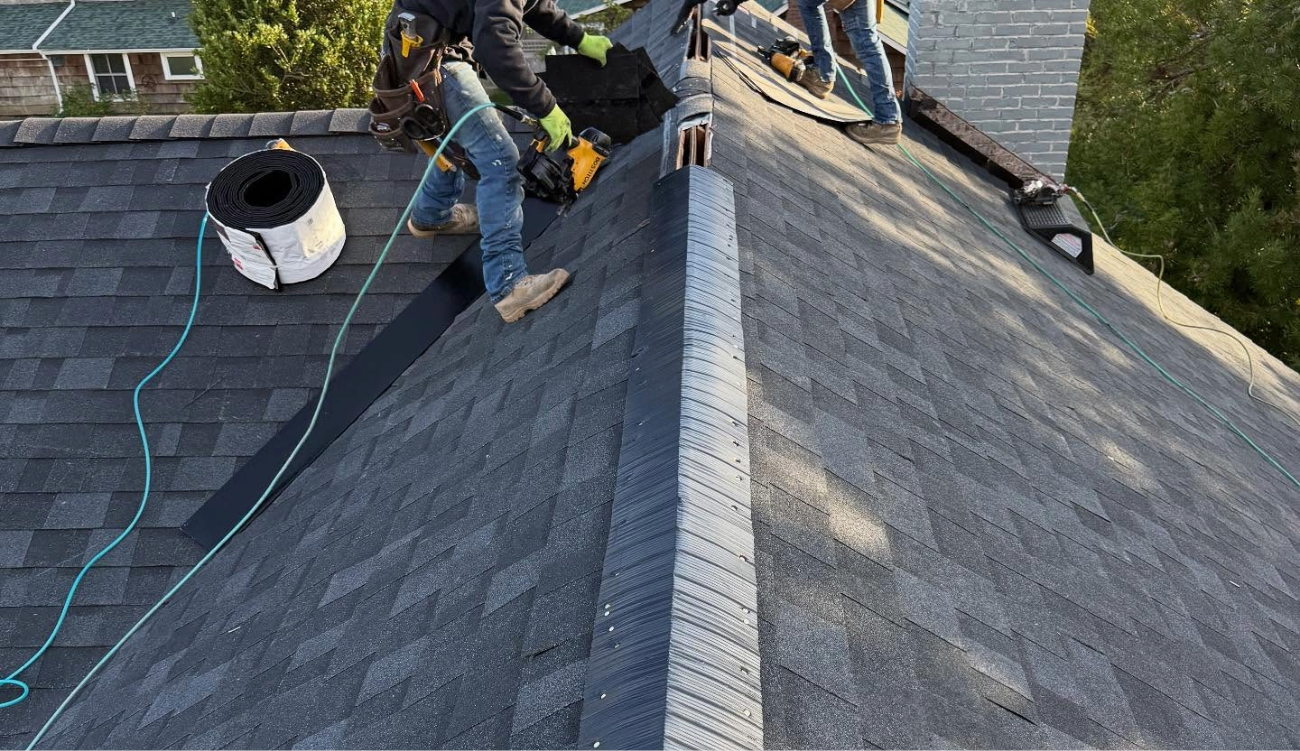
The vast majority of roof leaks originate not in the middle of a shingle field but at transitions and penetrations. Chimney flashing, pipe boot flashings around plumbing vents, step flashing at dormers and walls, valley intersections, and the areas around skylights are all significantly more likely to be the source of a leak than intact shingle surfaces. If you are trying to correlate a ceiling stain with a roof location, check these features first before looking at the open shingle field.
Simulate Rain If You Cannot Wait for the Next Storm
If you need to locate a leak immediately rather than waiting for rainfall, have someone run water from a garden hose across the roof in sections while another person watches from inside the attic. Start below the suspected area and work upward methodically. When the drip appears inside, the hose location identifies the general area of the entry point. This is more accurate than it sounds when done systematically and can save significant time in the diagnostic process.
Short-Term Steps to Limit Damage Before Repairs
If you discover an active leak and cannot get professional repair scheduled immediately, a few containment steps limit the damage accumulating in your home while you wait.
Contain the Water Inside
Place buckets or containers under any active drip points. If water is pooling behind a ceiling that has not yet broken through, carefully puncturing the low spot with a small nail allows the water to drain in a controlled location rather than spreading across the ceiling and potentially causing a larger, sudden collapse of the saturated drywall.
Protect Belongings and Document Everything
Move furniture, rugs, and valuables away from the affected area. Take photographs of all visible damage, including ceiling stains, attic moisture, and any visible roof damage from the exterior, before any repair work begins. This documentation supports insurance claims and creates a baseline record of the damage extent.
Apply a Temporary Exterior Cover if Conditions Allow
If you can safely access the roof and have identified a specific damaged area, a properly weighted polyethylene tarp can temporarily reduce additional water entry. Run the tarp from the ridge downward past the damaged area and secure the edges with boards or sandbags rather than nails through the tarp. This is a short-term measure only, not a substitute for professional repair, and should never be attempted in unsafe weather conditions.
To see the quality of our work firsthand, browse our project gallery featuring recent roof transformations.
The Most Common Causes of Roof Leaks on Long Island
Failed or Missing Flashing
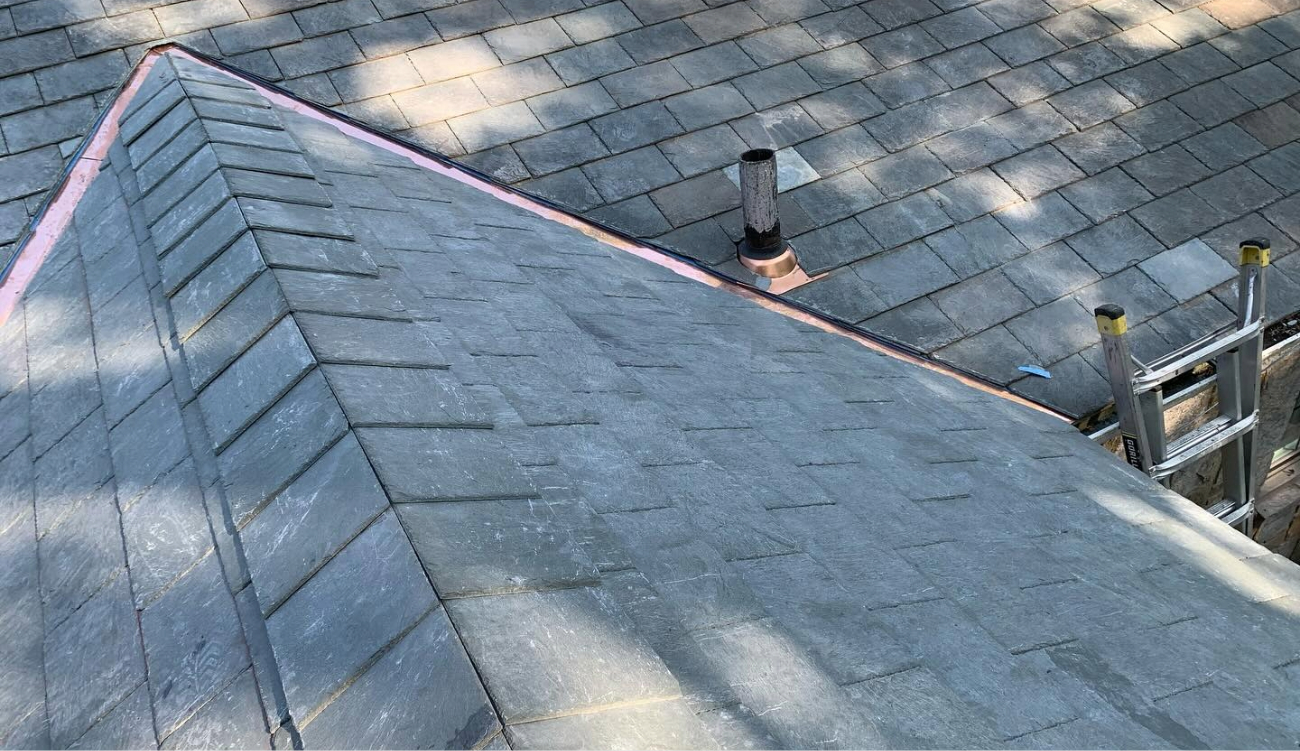
Flashing is the thin metal installed at every point where the roof surface meets a vertical structure or transitions between planes. Chimney flashing, step flashing at dormers and walls, and boot flashings around pipe penetrations all fail over time due to corrosion, thermal cycling, or poor original installation. Flashing failures account for a disproportionate share of roof leaks relative to the small percentage of the roof surface they occupy. When you need to fix a roof leak, flashing condition is almost always the first place a professional looks.
Deteriorated or Missing Shingles
Asphalt shingles lose their protective granule coating progressively over their service life. Once the granule layer thins significantly, the underlying asphalt becomes brittle and prone to cracking. High winds, hail, and ice can remove or crack shingles abruptly, while age-related deterioration is gradual. Any break in the shingle surface creates a potential water entry point, particularly in areas where shingles overlap and drainage depends on each course shedding water cleanly onto the course below.
Ice Dams
Ice dams are one of the most significant and destructive causes of roof leaks specific to northeastern climates. When heat escapes from the living space into the attic and warms the roof deck, snow on the upper roof melts and flows downward until it reaches the cold eaves, where it refreezes. The ice accumulation blocks drainage and forces meltwater to back up under shingles. Addressing ice dams properly requires both immediate physical removal in severe cases and a longer-term solution addressing attic insulation and ventilation to prevent recurrence.
Clogged or Failed Gutters
Gutters that are clogged with debris overflow during rain events, forcing water against the fascia and potentially behind the lower course of shingles. Gutters that have pulled away from the roofline leave a gap through which wind-driven rain can enter. While gutter problems are distinct from roofing system failures, they are one of the more common contributing factors to water intrusion at the eaves and fascia area.
Skylight and Chimney Issues
Both skylights and chimneys present complex flashing challenges that become more prone to failure as the sealants and flashing materials age. Chimney mortar that has eroded allows water to enter the chimney structure itself. Skylight seals that have failed allow water infiltration around the perimeter. Both are among the most common sources of interior water damage in Long Island homes and among the most misdiagnosed, because the staining often appears some distance from the actual feature.
What Homeowners Can Realistically Fix Themselves
There is an honest answer to how much of a roof leak repair a homeowner can accomplish safely and effectively, and it is more limited than the hardware store display of roofing products suggests.
Replacing a single clearly identified missing shingle on a low-pitch roof that is safely accessible is within the capability of a careful, physically capable homeowner with appropriate safety equipment. Reapplying sealant to a visible, accessible crack in a pipe boot flashing is similarly manageable for the right person in the right conditions.
What consistently produces poor outcomes when attempted without professional expertise is diagnosing the actual source of a leak from inside the house and assuming the repair location is obvious, applying roofing cement or caulk as a long-term fix to flashing that has failed structurally, re-shingling sections of roof without addressing the underlayment beneath, and working on any steeply pitched roof without professional safety equipment and experience. The repair that feels complete from the ground often fails within a season because the underlying cause was not correctly identified.
Why Professional Roof Repair Produces Better Long-Term Results
When you want to fix a roof leak in a way that actually holds through Long Island’s weather, professional repair consistently produces better outcomes than DIY for three interconnected reasons.
First, trained inspectors identify the actual cause rather than the visible symptom. The ceiling stain is not the leak. The failed flashing joint twenty feet away is the leak. Getting this diagnosis right is what makes the repair effective rather than temporary.
Second, professional repairs use the right materials installed correctly. The difference between a properly integrated flashing repair and one done with caulk from a tube is not visible immediately but becomes very apparent after the first nor’easter.
Third, a professional repair comes with accountability. At Aaron Roofing Corp, every repair is backed by a written estimate, completed by a fully licensed and insured crew, and reviewed in a final quality check before the job is considered complete. If something does not meet our standard, we address it before we leave.
How Aaron Roofing Corp Approaches Every Roof Repair
Our roof repair process is designed to find the real problem and fix it correctly the first time. We begin with a detailed professional inspection that goes beyond the visible damage to identify the root cause. We photograph problem areas and document our findings so you have a clear record of what was found and why we are recommending the specific repair we propose.
Our written repair estimate outlines the scope of work, the materials we will use, and the total cost before any work begins. We complete repairs using quality materials and proper installation techniques, then apply waterproofing and reinforcement to the repaired areas to ensure long-term protection. A final quality check confirms the repair meets our standards, the job site is cleaned, and you receive a walkthrough of the completed work.
As a fully licensed and insured roofing contractor on Long Island, our owner is actively involved in every project, ensuring the quality of workmanship and the accuracy of communication at every stage. We offer free roof inspections across Long Island with no obligation, because we believe you deserve an honest assessment before committing to anything.
Regular maintenance is key to a long-lasting home; explore our full range of roofing services in Long Island to keep your property protected.
Frequently Asked Questions
How quickly should I address a roof leak after discovering it?
As quickly as possible, ideally within days rather than weeks. Water infiltration that continues over time causes damage that compounds significantly. What begins as a stained ceiling can progress to rotted sheathing, mold growth in the attic, compromised insulation, and eventually structural damage to framing members. The cost of addressing a leak the week it is discovered is almost always a fraction of the cost of addressing the cumulative damage from a leak that has been present for a season or more. Scheduling a professional inspection immediately, even if the active drip has stopped, is the right response to discovering any evidence of water intrusion.
Will my homeowner’s insurance cover a roof leak repair?
Homeowner’s insurance typically covers roof leak damage caused by a sudden, identifiable event such as a storm, wind damage, hail, or a falling tree. It does not cover damage resulting from gradual deterioration, lack of maintenance, or normal aging. After a storm event, having your roof professionally inspected and documented before filing a claim provides the evidence the insurer needs to process the claim accurately. Keep in mind that some policies include cosmetic damage exclusions and depreciation provisions that affect the claim amount. Review your specific policy terms and consult with your insurance agent about coverage before assuming the repair will be fully covered.
How do I know if my roof needs repair or full replacement?
If the damage is isolated and the surrounding roofing system is in good overall condition, repair is typically the right approach. If the roof is approaching the end of its expected lifespan, has been repaired multiple times in the same general area, or shows widespread deterioration across multiple sections, a full replacement is often the more cost-effective long-term decision. A professional inspection is the most reliable way to answer this question for your specific situation. At Aaron Roofing Corp, we provide an honest assessment of whether repair or replacement better serves you without any pressure to choose the more expensive option.
Can a roof leak cause mold in my home?
Yes. Mold requires moisture and an organic food source to establish, and a roof leak provides both in the attic environment. Wet insulation, damp wood sheathing, and humid attic air all support mold growth, which can become established within 24 to 48 hours of a significant moisture event and can spread to adjacent materials if the moisture source is not eliminated. Once mold is established in the attic, remediation is a separate and often costly process on top of the roofing repair itself. Early detection and prompt repair is the most effective prevention strategy.
What should I do if my ceiling is actively dripping?
Place a container to catch the drip and prevent floor damage. If the ceiling appears to be bulging or sagging at the drip point, the material has become saturated and may be holding a significant volume of water. Carefully puncturing the low point with a small nail or screwdriver allows the water to drain in a controlled way before the weight causes the ceiling to collapse. Photograph the damage for insurance documentation. Move valuables from the area. Then schedule a professional inspection as soon as possible. Do not delay the inspection even if the dripping stops, as stopped dripping typically means the rain has stopped or the water has found a different path, not that the problem has resolved itself.
Act Now Before a Small Leak Becomes a Big Problem
The ability to fix a roof leak before it causes serious damage comes down almost entirely to how quickly you act and how thoroughly the source is identified. A slow drip or a ceiling stain is not a minor inconvenience. It is a signal that water has already breached your home’s primary weather barrier and is working on what comes next. Every rain event between discovery and repair is an opportunity for that damage to compound.
Aaron Roofing Corp serves homeowners across Long Island with professional roof repair performed by a fully licensed and insured team, with the owner actively involved on every project. We offer free roof inspections with no obligation, written estimates before any work begins, and a thorough final quality check before we consider the job complete. Whether you are dealing with an active leak, storm damage, or simply want to know the condition of your roof before problems develop, we are ready to help.
Contact Aaron Roofing Corp today at 516-343-0382 or visit aaronroofingcorp.com to schedule your free inspection. Do not wait until a fixable leak becomes a structural problem.