Top 7 Roofing Materials for Nassau County Weather Conditions
Best roofing materials for Nassau County homeowners need to hold up against a specific set of conditions that most national roofing guides do not account for: coastal wind exposure, summer humidity above 70 percent, nor’easter season from October through April, and freeze-thaw cycles that stress both shingles and underlayment every winter. Choosing the wrong material for Long Island’s climate does not just affect appearance — it affects how long your roof lasts, how much you spend on repairs, and whether your warranty remains valid after the first major storm. This guide ranks the top seven roofing materials by how well each one handles Nassau County’s specific weather demands so you can make a genuinely informed decision before your next replacement.
Table of Contents
Quick Answer: Best Roofing Materials for Nassau CountyThe best roofing materials for Nassau County are architectural asphalt shingles (GAF Timberline, Owens Corning TruDefinition, CertainTeed Grand Manor) for most residential applications — they balance cost, wind resistance up to 130 mph, and 25 to 50-year warranties for Nassau County’s four-season climate. Metal roofing and impact-resistant shingles are the premium tier for coastal exposure and storm-prone zones. TPO flat roofing is the standard for low-slope applications. Material cost ranges from $3 to $18 per square foot installed depending on type.
Why Best Roofing Materials for Nassau County Weather Matter
Best roofing materials for Nassau County perform differently than they would in a milder climate because the Island’s position at the Atlantic coast creates compounding stress on roofing systems that interior New York communities do not experience to the same degree. Nassau County averages 45 to 50 inches of rainfall annually, sees sustained winds of 40 to 60 mph during nor’easters, and experiences temperature swings from 10 degrees Fahrenheit in January to 95 degrees in August. That 85-degree annual range expands and contracts roofing materials repeatedly across every season.
The coastal proximity also introduces salt air exposure in communities close to the South Shore — Long Beach, Oceanside, and Rockville Centre experience measurable salt deposition on roofing surfaces that accelerates granule loss on low-grade asphalt shingles and promotes corrosion on improperly coated metal components. Homes within a mile of open water should factor coastal durability into material selection as an explicit requirement, not an afterthought.
Ice dam formation is a Nassau County-specific winter problem that damages more roofs than direct storm impact. When attic heat escapes through an under-insulated roof deck, it melts snow at the ridge line, which refreezes at the eaves where the surface is colder. This ice dam forces water backward under shingles. The best roofing materials for Nassau County are always installed with a proper ice and water shield underlayment as the first line of defense against this specific failure mode.
Best Roofing Materials for Nassau County: The Full Ranking
1. Architectural Asphalt Shingles: Best Roofing Materials for Nassau County Standard
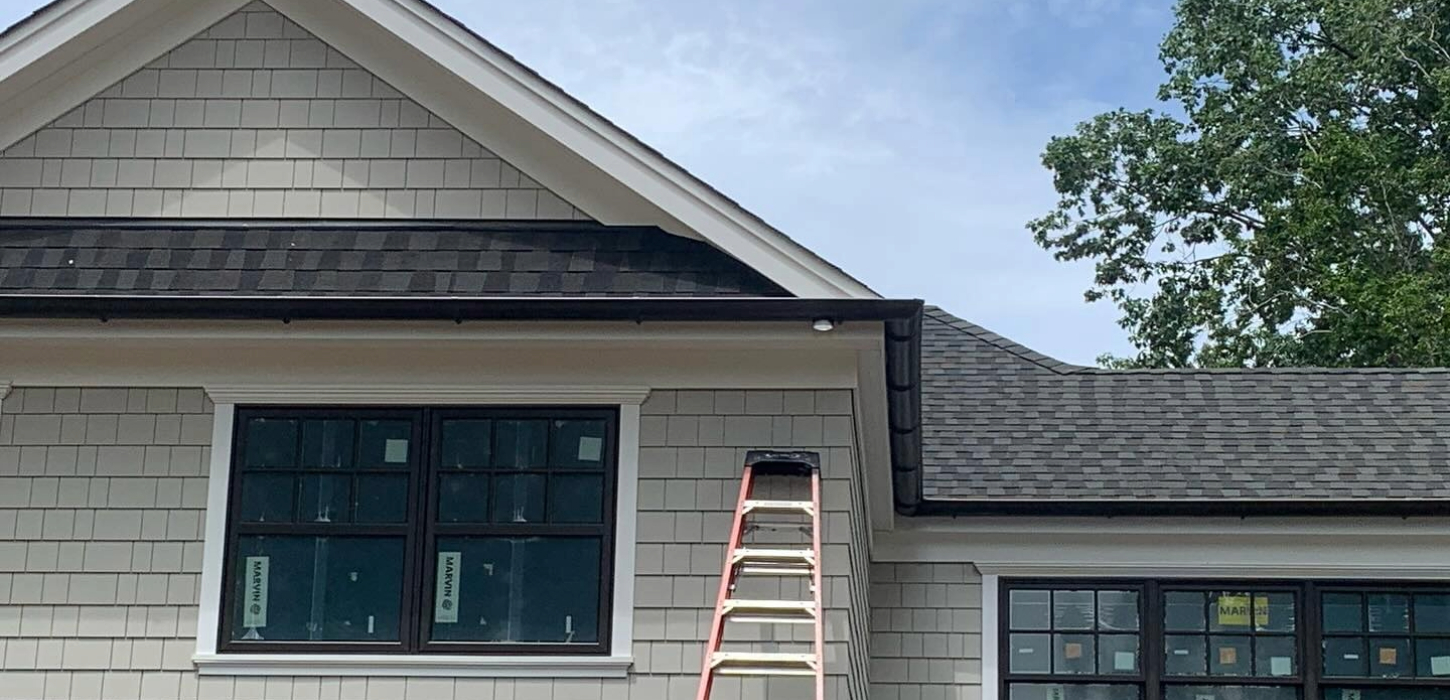
When evaluating best roofing materials for Nassau County, architectural asphalt shingles are the correct choice for the majority of residential roofs and represent 80 to 85 percent of the replacement roofs we install. GAF Timberline HDZ, Owens Corning TruDefinition Duration, and CertainTeed Landmark Pro are the three benchmark products for Long Island applications — each carries a wind rating of 130 mph, algae resistance treatment for the humid summer months, and manufacturer warranties of 30 to lifetime depending on the specific product line. Installed cost runs $4 to $7 per square foot for the material and labor combined on standard residential slopes.
2. Impact-Resistant Shingles (Class 4)
Class 4 impact-resistant shingles are the upgrade tier for Nassau County homes exposed to hail, falling branches, and the debris-laden winds that nor’easters bring off the Atlantic. The UL 2218 Class 4 designation means the shingle has passed a standardized impact test at the highest classification level. GAF Timberline AS II and Owens Corning TruDefinition Duration Storm carry this rating. Some Nassau County homeowners also qualify for a homeowner’s insurance discount of 10 to 30 percent when impact-resistant shingles are installed — worth confirming with your carrier before final material selection.
3. Metal Roofing (Standing Seam)
Standing seam metal roofing tops the best roofing materials for Nassau County premium tier for homes prioritizing maximum durability and wind resistance. Properly installed standing seam metal systems carry wind ratings of 140 mph or higher, have a 40 to 70-year service life, and are resistant to the salt air corrosion that affects coastal communities when the right alloy and coating are specified. Steel with a Galvalume coating or aluminum with a PVDF paint system are the appropriate metal specifications for Long Island’s coastal environment. Installed cost runs $10 to $18 per square foot — roughly two to three times the cost of architectural shingles, with a proportionally longer service life.
4. TPO Flat Roofing (Low-Slope Applications)
TPO (thermoplastic polyolefin) is the standard for flat and low-slope roofing on Nassau County garages. Our Long Island flat roofing service covers both TPO and EPDM for residential and commercial applications. TPO, additions, commercial buildings, and rooflines with pitch below 2:12. TPO’s white reflective surface reduces summer heat absorption, which is measurable in communities like Hempstead, Garden City, and Levittown where heat island effects from dense suburban development raise ambient temperatures. A properly installed 60-mil TPO membrane with heat-welded seams provides 15 to 25 years of waterproof protection. Installed cost runs $5 to $9 per square foot for residential applications.
5. EPDM Rubber Roofing
EPDM (ethylene propylene diene monomer) is the alternative flat roofing system used on Nassau County residential properties where cost is the primary driver. EPDM performs reliably in Long Island’s temperature range and is particularly resistant to UV degradation — a concern on south-facing flat roofs in summer. The material is less reflective than TPO, which increases cooling load in summer, but EPDM is generally 10 to 15 percent less expensive to install. Seams are adhesive-bonded rather than heat-welded, which makes EPDM more vulnerable to long-term water intrusion if not installed correctly.
6. Cedar Shake and Wood Shingles
Cedar shake roofing produces a distinctive aesthetic that works well in Nassau County’s older established neighborhoods — Manhasset, Garden City, Rockville Centre — where maintaining period character matters to homeowners and local architectural review requirements. However, wood roofing requires significantly more maintenance than asphalt or metal alternatives, needs annual treatment in Nassau County’s humid summers to prevent algae and moss growth, and carries a 20 to 30-year service life when properly maintained. Installed cost runs $8 to $14 per square foot. Cedar is best suited for homeowners who explicitly want the aesthetic and accept the maintenance obligation.
7. Synthetic Slate and Composite Shingles
Synthetic slate products from manufacturers like DaVinci Roofscapes and CertainTeed Belmont offer the visual profile of slate roofing without the structural load requirements and per-square-foot cost of natural slate. Nassau County homes with slate-style roofs in older communities can be re-roofed with synthetic slate at installed costs of $9 to $15 per square foot versus $18 to $30 or more for authentic quarried slate. Synthetic composite shingles carry Class 4 impact ratings and 50-year warranties, making them one of the highest-performing options on this list for storm resistance.
| Material | Installed Cost/sq ft | Lifespan | Wind Rating | Best For |
|---|---|---|---|---|
| Architectural Asphalt | $4 – $7 | 25-50 yrs | 130 mph | Most residential roofs |
| Impact-Resistant (Class 4) | $5 – $8 | 30-50 yrs | 130+ mph | Storm-prone areas, insurance discounts |
| Standing Seam Metal | $10 – $18 | 40-70 yrs | 140+ mph | Coastal homes, premium durability |
| TPO Flat Roofing | $5 – $9 | 15-25 yrs | N/A (flat) | Garages, additions, commercial |
| EPDM Rubber | $4 – $8 | 15-25 yrs | N/A (flat) | Budget flat roofing |
| Cedar Shake | $8 – $14 | 20-30 yrs | 110 mph | Period homes, aesthetic priority |
| Synthetic Slate | $9 – $15 | 50 yrs | 130+ mph | Slate look, Class 4 performance |
Not sure which material is right for your Nassau County home? Schedule a free roof inspection with Aaron Roofing Corp — we evaluate your roof’s current condition, exposure, and slope and recommend the material that delivers the best performance for your specific property.
Nassau County Building Code and Best Roofing Materials for Nassau County
Best roofing materials for Nassau County must also meet local building code requirements that differ from New York State’s baseline standards in several key areas. Nassau County is classified as a High Velocity Wind Zone in coastal sections, which requires roofing systems to meet specific wind uplift resistance standards under the New York State Residential Code. This affects underlayment requirements, fastening schedules for shingles, and the minimum weight of materials used in exposed locations.
According to the National Association of Home Builders, proper material specification and installation to local wind zone requirements is one of the most significant factors in roofing system performance after major storm events — homes with code-compliant installations consistently outperform those installed to minimum standards in post-storm damage surveys. Nassau County’s permit process for roof replacement requires inspection by the building department in most municipalities, which provides a compliance checkpoint that protects homeowners from substandard installations.
Choosing best roofing materials for Nassau County always includes this compliance layer. Aaron Roofing Corp handles all Nassau County permit applications as part of every roof replacement project. We specify materials that meet local wind zone requirements and install to manufacturer specifications that support the warranty — both of which are required for the permit sign-off we obtain on your behalf.
Ready to choose the right roofing material for your Nassau County home? Visit our Long Island roof replacement service page to see the materials we install and the process we follow from inspection through final walkthrough.
How to Choose Best Roofing Materials for Nassau County
Best roofing materials for Nassau County selection comes down to four practical questions that apply to every homeowner’s situation regardless of budget or home style. Running through these before requesting quotes focuses your decision and prevents confusion during the proposal stage.
- What is your roof pitch? Slopes below 2:12 require flat roofing systems (TPO or EPDM). Slopes above 4:12 are suitable for asphalt shingles, metal, cedar, or synthetic options. Pitch determines which materials are physically viable before any other factor.
- How close are you to the water? South Shore communities within one mile of the ocean or bay should prioritize salt-air resistant materials and coatings. Metal roofing requires marine-grade alloys and coatings in these locations. Asphalt shingles should be Class 4 or premium-grade products.
- What is your budget and time horizon? Architectural asphalt at $4 to $7 per square foot with a 25 to 30-year lifespan is the best value for most Nassau County homeowners. If you plan to stay in the home 30 or more years, metal or synthetic slate delivers a better total cost of ownership despite higher upfront cost.
- Does your neighborhood have architectural guidelines? Some Nassau County communities — particularly in incorporated villages — have architectural review requirements that specify acceptable roofing materials and color ranges. Confirm any restrictions before selecting a material.
Frequently Asked Questions
What are the best roofing materials for Nassau County homes near the water?
The best roofing materials for Nassau County coastal homes are Class 4 impact-resistant architectural shingles for most budgets, or standing seam metal with a PVDF-coated Galvalume or aluminum substrate for maximum durability. Coastal locations experience salt air, higher wind speeds, and more frequent storm exposure than inland communities. Standard entry-level asphalt shingles degrade faster in these conditions. Impact-resistant products with algae and salt-air-resistant granules are the minimum appropriate specification for homes within one mile of Long Island Sound or the Atlantic coast.
How long does a new roof last on Long Island?
For details on our full installation process, see our step-by-step roofing process. Most architectural asphalt shingle roofs installed on Long Island carry 25 to 50-year manufacturer warranties and realistically last 25 to 35 years with proper ventilation and maintenance. Premium shingles from GAF, Owens Corning, and CertainTeed at the top of their product lines carry lifetime warranties when installed by a certified contractor. Metal roofing lasts 40 to 70 years. Flat TPO roofing lasts 15 to 25 years. Actual lifespan depends on installation quality, attic ventilation, and maintenance history more than material specification alone.
Is metal roofing a good choice for Nassau County weather?
Metal roofing is an excellent choice for Nassau County weather and performs better than asphalt in wind resistance, longevity, and coastal salt-air conditions when the correct alloy and coating are specified. Standing seam metal carries wind ratings of 140 mph or higher, handles Long Island’s freeze-thaw cycles without cracking, and requires virtually no maintenance over its 40 to 70-year service life. The higher upfront cost of $10 to $18 per square foot makes it best suited for homeowners planning to stay in their home long-term or for properties where maximum storm resilience is a priority.
Which best roofing materials for Nassau County flat roofs — TPO or EPDM?
TPO and EPDM are both suitable flat roofing systems for Nassau County. TPO’s white reflective surface reduces summer cooling costs and is heat-welded at seams, providing stronger waterproofing performance. EPDM is black, absorbs more heat, and uses adhesive-bonded seams that are slightly more vulnerable to long-term water infiltration. TPO is the preferred choice for most residential flat roofing applications. EPDM is a cost-effective alternative for budget-constrained projects where the lower upfront cost outweighs the slight performance difference.
Do I need a permit for a roof replacement in Nassau County?
Yes, most Nassau County municipalities require a building permit for a full roof replacement. The permit process includes a building department inspection before and after installation to verify code compliance. Specific requirements vary by municipality within Nassau County. Licensed roofing contractors handle permit applications and inspections as part of the project. Always confirm your contractor includes permit management in their scope of work — installing a roof without the required permit can create issues at the time of home sale.
Choose the Right Roofing Material for Your Nassau County Home
Best roofing materials for Nassau County selection comes down to matching your home’s specific exposure, budget, and time horizon to a material that genuinely performs under Long Island’s four-season coastal climate. Architectural asphalt shingles from GAF, Owens Corning, or CertainTeed are the right answer for most homes. Coastal properties, storm-prone lots, and homeowners planning a 40-year time horizon benefit from metal or Class 4 impact-resistant options. Whatever direction you choose, installation quality and code compliance matter as much as the material itself. Aaron Roofing Corp has served Nassau and Suffolk County homeowners for years, completing hundreds of roof replacements with free inspections, transparent proposals, and a 10-year labor warranty on every full replacement. Contact us today for your free on-site assessment and a material recommendation built around your specific property.