Soffit Repair in Long Island: Common Problems, Costs, and When to Call a Pro
Most Long Island homeowners walk past their soffits every day without giving them a second thought. That is exactly how a healthy soffit should function, quietly and without demanding attention. But when soffit problems develop, which they do with remarkable regularity in northeastern coastal climates, the effects reach far beyond the eave area where the soffit lives. Damaged soffits allow moisture into the rafter cavity and attic space, compromise the ventilation system that protects your roofing structure, and invite pests to establish themselves in areas of the home that are difficult and expensive to remediate once the damage is done.
At Aaron Roofing Corp, we serve Long Island homeowners with comprehensive exterior services including roofing, siding, and exterior repairs. Soffit damage is a consistent finding during our free roof inspections, and we frequently see situations where soffit problems that would have been straightforward to address early have progressed to involve adjacent fascia, rafter tails, and attic insulation. This guide covers the most common soffit problems on Long Island homes, what they cost to repair, and how to know when professional attention is needed.
What Is a Soffit and What Does It Do?
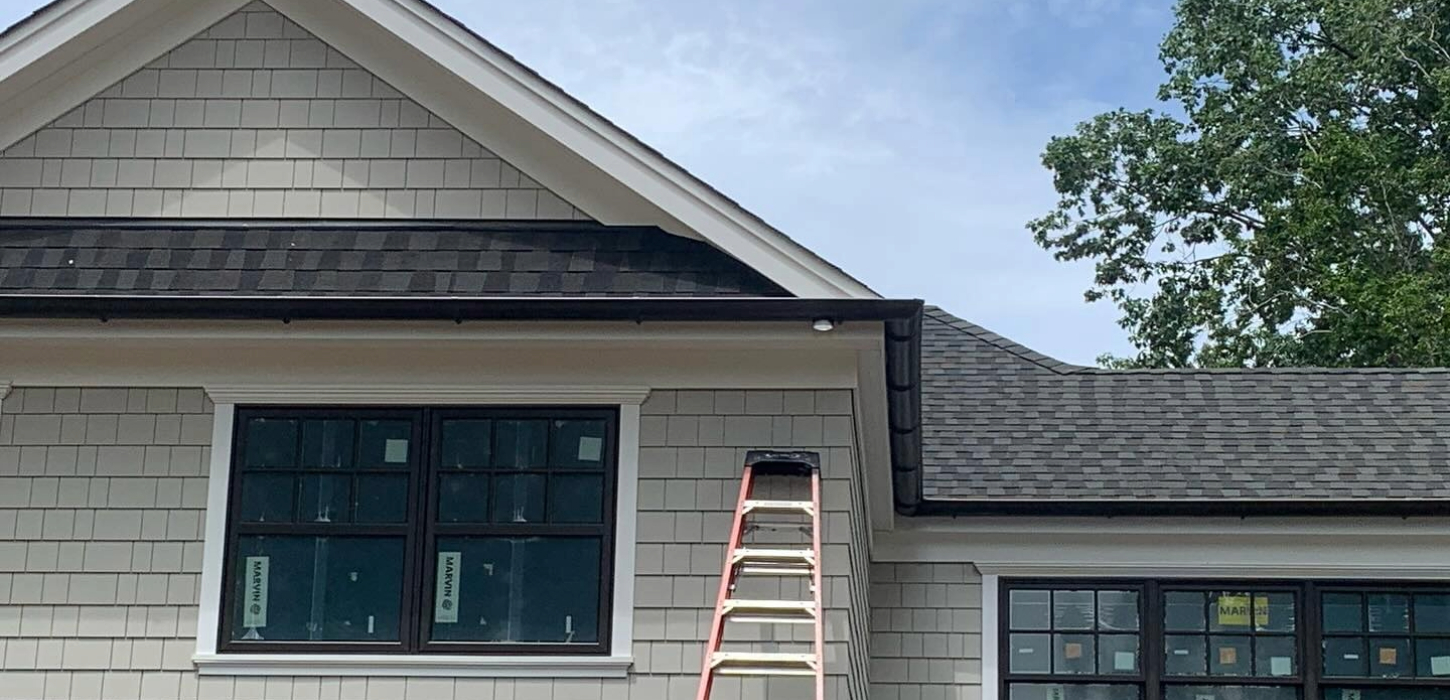
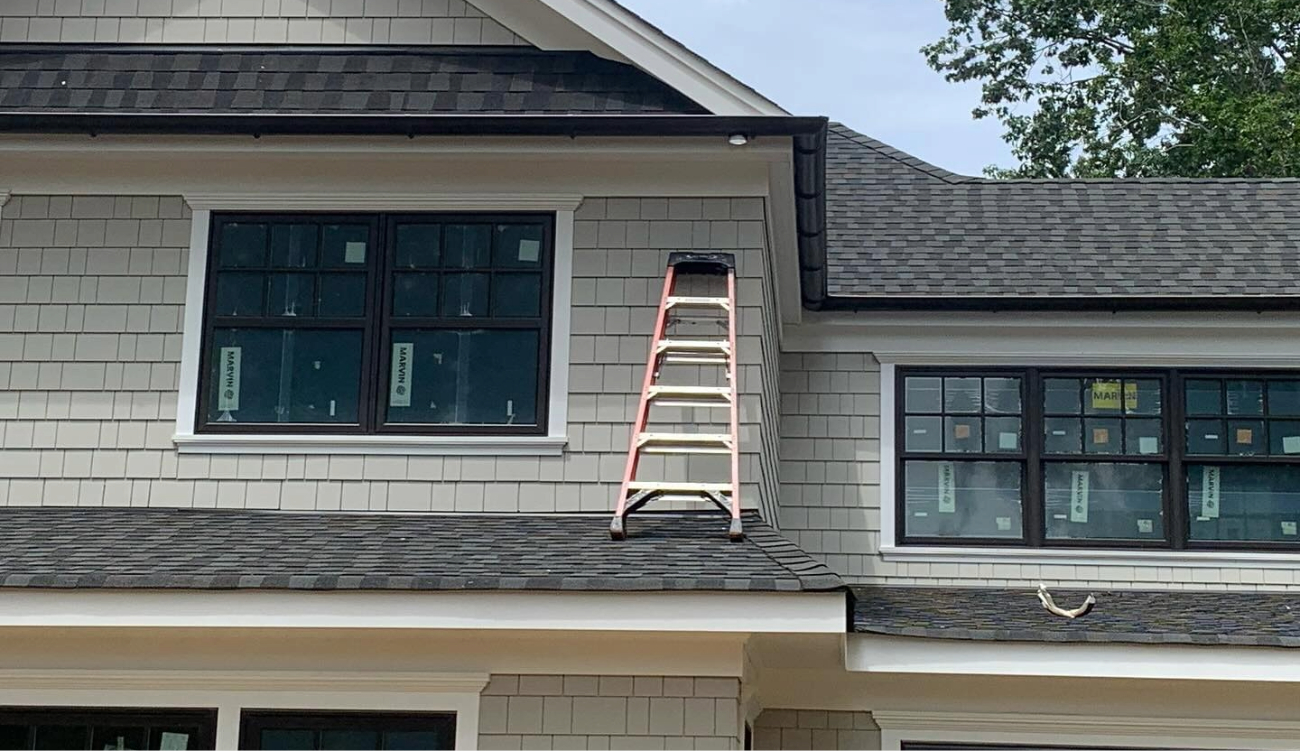
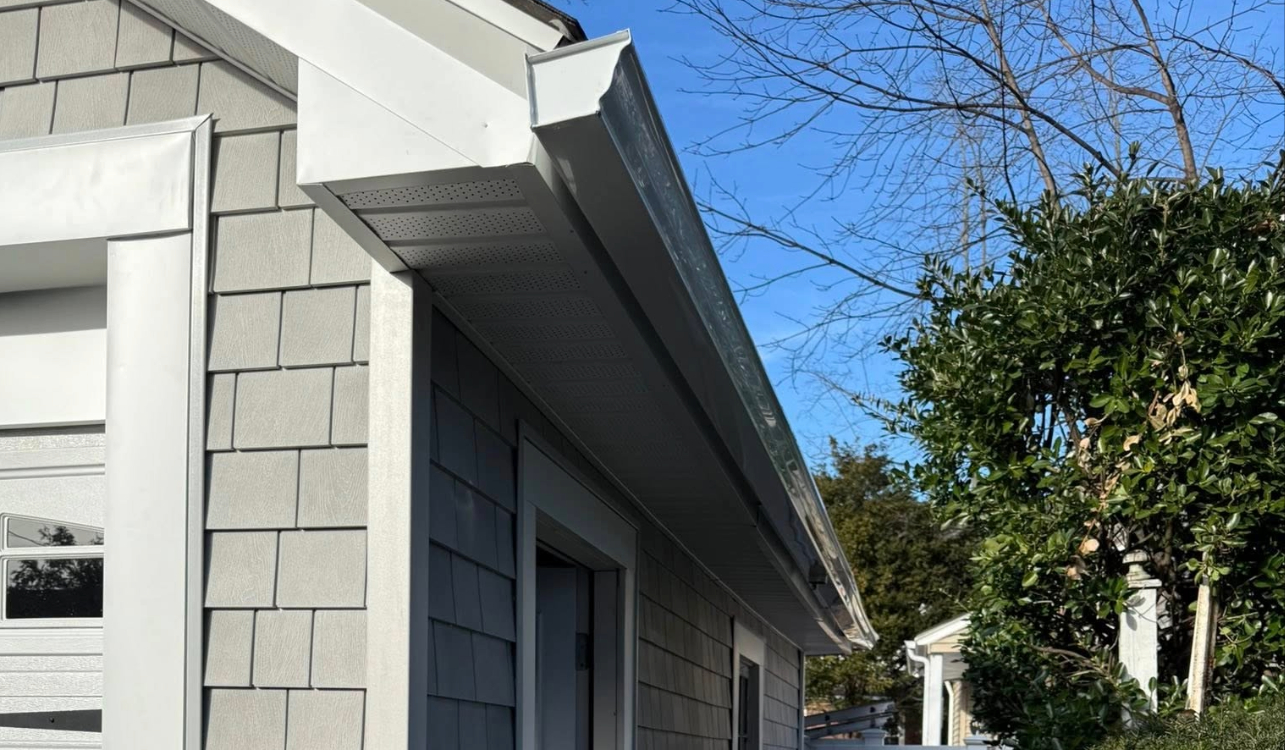
The soffit is the horizontal surface beneath the roof overhang, spanning the area between the fascia board at the outer edge of the roofline and the exterior wall of the home. It encloses the underside of the roof rafter tails and the eave space, giving the roofline a finished appearance and serving several functional roles that most homeowners do not fully appreciate until one of them fails.
The most critical functional role of the soffit is ventilation. Vented soffits contain perforations or vent strips that allow outside air to enter the attic space at the eave level. This intake air, flowing upward through the attic and exiting at or near the ridge through exhaust vents, creates the continuous airflow that prevents heat buildup in summer and moisture accumulation in winter. Without adequate soffit ventilation, attics overheat, shingles bake from below, and condensation creates the moisture conditions that support mold growth and wood deterioration in the roof structure. Soffit ventilation is not an optional feature. It is a fundamental component of a properly functioning residential roofing system.
Soffits also seal the rafter cavity from the exterior, blocking pest access and protecting the structural wood of the rafter tails from direct weather exposure. When soffits are damaged or missing sections, these protections are compromised simultaneously.
Common Soffit Problems on Long Island Homes
Rot and Deterioration in Wood Soffit Material
Many older Long Island homes were built with wood soffits that, while durable when properly maintained and painted, are vulnerable to moisture infiltration once the paint protection fails. Wood soffit rot typically begins at the edges, around vent openings, and at the corners where water tends to accumulate. The rot progresses inward from these entry points, and by the time it is visible from the ground, it is usually more extensive than the surface appearance suggests. Probing soft-looking areas with a screwdriver reveals how far the decay has penetrated.
Cracked, Warped, or Loose Aluminum or Vinyl Soffit Panels
Aluminum and vinyl soffit panels are more moisture-resistant than wood but have their own failure modes. Aluminum panels can dent from physical impact, including hail, and expand and contract with temperature changes in ways that eventually loosen the locking connections between panels. Vinyl panels become brittle under prolonged UV exposure and cracking is more common in colder weather when the material contracts. Panels that have come loose from their channels allow water and pests to access the rafter cavity behind them.
Pest Damage and Infestation
Soffits are one of the most common points of entry for squirrels, birds, and wasps establishing themselves in the attic or rafter cavities of Long Island homes. Squirrels in particular are persistent and capable of chewing through aluminum and vinyl soffit panels, and once inside they cause damage to insulation, wiring, and structural wood that extends far beyond the entry point. Bird nests in the rafter cavity block ventilation openings. Wasp nests built inside the eave space can be substantial and create structural concerns when they absorb moisture over multiple seasons. Effective soffit repair in these cases requires both addressing the damaged panels and confirming no active infestation remains before closing the space.
Blocked or Failed Ventilation
Soffit vents can become blocked by paint applied over them during exterior painting, by insulation that has been pushed outward from the attic floor and is covering the vent openings from the inside, or by debris accumulation. Blocked soffit ventilation significantly reduces the airflow that prevents heat and moisture buildup in the attic. This problem is often invisible from the exterior because the vents appear intact while being non-functional. An attic inspection that identifies inadequate airflow can trace the problem back to blocked soffit vents that require either clearing or replacement.
Why Soffit Damage Happens and What Accelerates It
Long Island’s combination of coastal humidity, significant annual rainfall, freeze-thaw cycling, and summer UV intensity creates conditions that accelerate soffit deterioration across all material types. Gutters that are clogged or improperly pitched overflow during rain events, depositing water along the fascia and soffit rather than carrying it to the downspouts. This chronic moisture exposure is the primary driver of wood soffit rot and is also the most preventable, as it is directly connected to gutter maintenance.
Poor attic ventilation creates a compounding problem. When the attic is not adequately ventilated, warm humid air from the living space condenses on the underside of the roof deck and drips down to the soffit area, saturating wood soffit material from the interior side. This type of damage is often mistaken for an exterior leak because the moisture appears at the eave, but the source is internal rather than from rainfall. Identifying the actual cause is essential for addressing it correctly rather than applying an exterior repair to an internally sourced moisture problem.
If your roof is over 20 years old, it might be time to consult our expert roofing team about your replacement options.
Warning Signs You Need Soffit Repair
Visible Staining, Peeling Paint, or Discoloration
Water staining, dark streaking, or peeling paint on the soffit surface is one of the earliest visible indicators of moisture infiltration. These symptoms develop before structural deterioration is significant and represent the ideal time to investigate and address the problem. Ignoring visible staining and waiting until the material feels soft typically means the repair scope has expanded from panel replacement to structural wood repair.
Soft or Sagging Sections
Areas of the soffit that feel soft, spongy, or give slightly under pressure when touched indicate that the material or the structural wood behind it has been compromised by moisture. Sagging sections indicate that the panel material has lost its structural integrity and in some cases that the rafter tails or lookout boards supporting the soffit have begun to deteriorate.
Visible Openings or Gaps
Gaps at panel joints, missing sections, or visible separations between the soffit and the fascia are obvious indicators that the protective function of the soffit has been breached. These openings provide direct pest access and allow wind-driven rain to enter the rafter cavity. Even small gaps should be addressed promptly because they tend to enlarge as the surrounding material deteriorates and as pests work the opening further.
Evidence of Pests at the Eave
Scratching sounds from the eave area, visible nesting material at the roofline, or wasps entering and exiting the eave space all indicate pest activity that involves or has compromised the soffit. Any suspected pest entry point at the soffit or fascia should be professionally assessed before closure to confirm the extent of interior activity and ensure no active nest or infestation is sealed inside.
Attic Moisture or Temperature Problems
If attic inspections consistently reveal moisture, mold, or elevated temperatures, blocked or inadequate soffit ventilation may be a contributing factor. While attic problems have multiple potential causes, soffit ventilation condition should be evaluated as part of any attic moisture investigation.
What Does Soffit Repair Cost on Long Island?
Soffit repair costs on Long Island depend on the material involved, the linear footage requiring repair, whether associated structural work is needed, and access conditions around the perimeter of the home. Here is a realistic framework for understanding the cost range.
Minor Panel Repairs
Replacing a small number of damaged or missing soffit panels on an otherwise sound system, where the underlying structure is intact and no fascia work is required, is among the more straightforward exterior repair scenarios. Material costs for aluminum soffit panels are modest, and the labor for a limited repair is typically a few hours. Minor repairs of this type generally run in the range of a few hundred dollars including materials and labor.
Full Eave Section Replacement
When an entire section of the eave has experienced significant deterioration requiring removal and replacement of both the soffit panels and potentially the fascia board, the project scope and cost increases proportionally. Full replacement of soffit and fascia across one or more sides of a home can run from several hundred to several thousand dollars depending on the home’s size and the extent of the damage.
Structural Repairs
When soffit damage has progressed to involve rafter tail rot, damaged lookout boards, or compromised sheathing at the eave, the repair requires structural carpentry in addition to material replacement. This is the most expensive scenario and underscores the value of addressing soffit problems when they first become visible rather than deferring action until the damage has reached the structural wood. Structural repairs at the eave area add cost that is difficult to predict without an on-site assessment of the specific condition.
A total replacement is a big project, but our proven step-by-step method makes the transition smooth and stress-free.
Soffit Material Options for Long Island Homes
Aluminum Soffit
Aluminum soffit panels are the most common choice for replacement and new installation on Long Island homes. They are moisture-resistant, will not rot, and maintain their structural integrity through the temperature extremes and humidity levels of the region’s climate. Vented aluminum soffit panels maintain the intake ventilation function while providing the moisture resistance that wood cannot match. They are available in a range of colors and profiles to match or complement the home’s existing exterior.
Vinyl Soffit
Vinyl soffit panels are less expensive than aluminum and offer good moisture resistance but perform less well under the temperature extremes of Long Island winters. They can become brittle and crack in sustained cold, and they have lower wind load resistance than aluminum. For coastal properties with elevated wind exposure, aluminum is generally the better specification.
Fiber Cement Soffit
Fiber cement soffit panels offer excellent durability, moisture resistance, and dimensional stability, and they accept paint to match virtually any home exterior color. They are heavier and somewhat more labor-intensive to install than aluminum but produce a premium result that is particularly appropriate for homes where matching the architectural detail of wood soffit is a priority without the rot vulnerability that wood carries.
DIY vs Professional Soffit Repair: Making the Right Call
Replacing a single loose or missing aluminum soffit panel that snaps back into its channel without requiring any structural work is a reasonable DIY project for a homeowner with appropriate ladders and basic tool familiarity. The material is available at home improvement stores, and the installation is straightforward when the underlying structure is sound and the replacement panel matches the existing profile.
Professional soffit repair is the appropriate choice when the scope extends beyond a single panel, when the material below or adjacent to the soffit shows signs of rot or structural compromise, when pest activity is involved and the interior space needs assessment before closure, when the work requires significant ladder or scaffold access around the full perimeter of the home, or when the soffit replacement is part of a larger exterior project involving fascia, gutters, or siding. At Aaron Roofing Corp, our exterior team handles soffit repair as part of our comprehensive roofing and exterior services, and we assess the full scope of what a repair requires before committing to any scope of work in our written estimate.
Related Work Often Discovered During Soffit Repair
Soffit repair frequently reveals conditions in adjacent components that need to be addressed at the same time. Fascia deterioration is the most common finding, as the same moisture conditions that damage the soffit typically affect the fascia board to which it is attached. Rafter tail rot, as discussed, is the most serious structural finding and should be addressed completely before new soffit material is installed. Gutter condition should be evaluated as part of any soffit repair project because inadequate gutter performance is often a contributing cause of the soffit damage in the first place. Repairing the soffit without addressing a clogged or improperly pitched gutter means the new material will be subjected to the same moisture exposure that damaged the original.
At Aaron Roofing Corp, we handle roofing, gutters, siding, and exterior repairs under one company, which means that related work discovered during a soffit repair project does not require coordinating a separate contractor. The same licensed, insured team that identifies the full scope of the problem completes the full scope of the repair.
Transform your home’s curb appeal take a look at our before and after photos for some inspiration.
Frequently Asked Questions
How do I know if my soffit vents are blocked?
The most direct way to check is from the attic. With a flashlight, look toward each soffit vent location and confirm you can see daylight through the vent openings. Blocked vents will appear dark or partially obscured. If the attic is heavily insulated, the insulation may be covering the vent openings from the interior side, which is a common finding in homes where insulation was added or upgraded without installing vent baffles to maintain the airflow channel at the eave. From the exterior, vents that appear intact but have been painted over multiple times may have the vent openings sealed by accumulated paint layers that need to be cleared.
Can soffit damage cause problems with my homeowner’s insurance?
Soffit damage caused by a specific, sudden event such as storm wind damage or a falling tree branch is typically covered under homeowner’s insurance subject to your deductible and coverage terms. Soffit deterioration resulting from long-term moisture exposure, deferred maintenance, or normal aging is generally not covered. After a storm event, documenting the damage thoroughly with photographs before any repair work begins supports the insurance claim process. If your soffit damage has developed gradually rather than from a specific event, the repair cost is typically a homeowner expense.
How long does soffit repair take?
A minor soffit repair involving a small number of panels on a single section of the eave can typically be completed in a few hours by an experienced crew. A more extensive project involving full perimeter soffit replacement on a larger home, or one that includes associated fascia repair or structural carpentry, may take one to two full days. Projects that involve scaffolding setup for multi-story access will require additional time for setup and breakdown. Your contractor should provide a realistic timeline as part of the written estimate before work begins.
What attracts squirrels to soffit areas on Long Island?
Squirrels are drawn to soffit areas primarily because the enclosed, protected space inside the rafter cavity provides an ideal nesting environment. The relative warmth of the attic-adjacent space during winter months makes it particularly attractive. Weak or deteriorated soffit panels, especially at corners and around vent openings where the material may have cracked or separated, provide the initial access point that squirrels then enlarge. Trimming tree branches that provide convenient access to the roofline significantly reduces squirrel pressure on the soffit area, as most squirrel access involves a jump or run from an adjacent branch rather than climbing the exterior wall from the ground.
Does new siding always include replacing the soffit?
Not necessarily. Siding replacement addresses the exterior wall cladding rather than the eave components, though the two projects are sometimes combined when both are needed and when the staging and access logistics make doing them together more efficient. If the soffit is in sound condition when new siding is installed, it typically does not need to be replaced as part of the siding project. However, if the existing soffit is deteriorated, combining both projects avoids a scenario where new siding is installed with an immediately adjacent eave component that needs attention within a few years, which would require re-accessing areas of the new siding for the soffit repair.
Address Soffit Problems Before They Reach the Structure
Soffit repair is one of those projects where the cost-benefit of early action is particularly clear. Minor panel damage identified early is a modest, straightforward repair. The same damage left through another season of moisture exposure can involve structural carpentry, attic remediation, and pest control work that multiplies the original repair cost significantly. The soffit’s role in attic ventilation means that its failure also creates a compounding effect on roofing system longevity. Acting when the problem is small is almost always the right call.
Aaron Roofing Corp serves Long Island homeowners across Nassau and Suffolk County with comprehensive exterior services including roofing, gutters, siding, and exterior repairs. Our team is fully licensed and insured, our owner is actively involved on every project, and every job begins with a thorough inspection and a clear written estimate before any work starts. We offer free inspections with no obligation.
Contact Aaron Roofing Corp today at 516-343-0382 or visit aaronroofingcorp.com to schedule your inspection. Whether you have visible soffit damage or simply want to know the condition of your home’s exterior, we are ready to give you an honest picture and a clear path forward.