House Gutter Installation in Nassau County: What Homeowners Should Know Before Getting Started
Gutters are one of the least glamorous components of a home and one of the most consequential. A properly functioning gutter system routes rainfall and snowmelt away from your home’s foundation, fascia, siding, and landscaping in a way that prevents the slow, expensive damage that water accumulation causes over time. A failing gutter system, or the absence of one altogether, allows water to do exactly what it does naturally when there is nothing to redirect it: flow downward and accumulate wherever gravity takes it, which is usually along your foundation, behind your siding, and under your fascia boards.
For Nassau County homeowners considering house gutter installation, there is a meaningful gap between understanding why gutters matter and understanding what a quality installation actually involves. At Aaron Roofing Corp, we install seamless gutter systems across Long Island as part of our full-service exterior work, and we see the consequences of inadequate gutters regularly during our roofing inspections. This guide covers everything you need to know before getting started with a gutter installation project on your Nassau County home.
Why Gutters Matter More Than Most Homeowners Realize
The volume of water that a residential roof sheds during a moderate rainstorm is substantial. A typical Nassau County home with 1,500 square feet of roof area receives more than 900 gallons of water during a one-inch rainfall event. Without a properly designed and functioning gutter system, all of that water falls from the eaves in a concentrated curtain directly at the foundation perimeter, saturating the soil, eroding landscaping, and creating the hydrostatic pressure against the foundation that causes basement water intrusion and, over time, foundation movement and cracking.
Beyond foundation protection, gutters prevent water from running down the exterior walls of the home, which causes paint failure, wood rot, mold growth on siding, and moisture intrusion into wall cavities. They also protect the fascia boards to which they are attached. A properly functioning gutter moves water away from the fascia surface. A clogged or absent gutter allows water to overflow or run behind the gutter, saturating the fascia and accelerating the rot that eventually compromises the structural attachment of the entire gutter system.
Selecting your materials is just the beginning; learn how we manage the installation in our detailed project guide.
Types of Gutters: Seamless vs Sectional
Seamless Gutters
Seamless gutters are fabricated on-site from a continuous coil of aluminum stock using a mobile forming machine. The gutter runs the full length of each roofline section without seams except at the corners and downspout connections. This is the professional standard for house gutter installation in Nassau County and across Long Island, and for good reason. The absence of seams along the horizontal runs eliminates the primary failure point of traditional gutter systems. Sectional gutters fail at their joints. Seamless gutters do not have joints to fail.
Aaron Roofing Corp installs seamless gutter systems specifically because the long-term performance advantage over sectional gutters is substantial. A seamless system installed correctly with proper pitch and secure fastening will out-perform and out-last a sectional system under Long Island’s rainfall and winter conditions.
Sectional Gutters
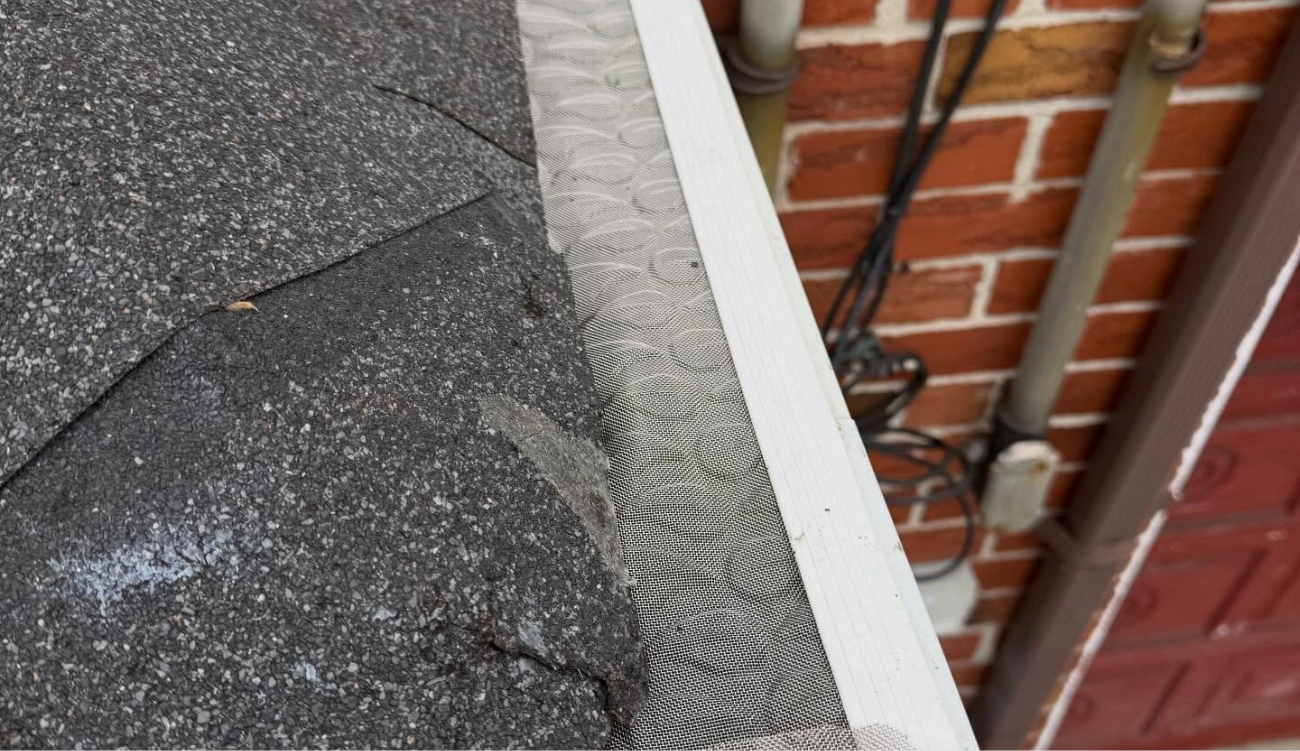
Sectional gutters are pre-cut lengths of gutter material joined together with slip connectors and sealant. They are the type available in home improvement stores and are the basis of most DIY gutter installations. The joints are sealed with caulk that degrades over time and particularly under the temperature cycling that Long Island winters deliver. When the sealant fails, the joint leaks. Over a 10 to 15 year period, sectional gutters require progressively more maintenance to address failing joints. For a permanent installation on a Nassau County home, seamless gutters are the right choice.
Gutter Materials and What Works Best on Long Island
Aluminum
Aluminum is the most widely used material for residential gutter installation in Nassau County and across Long Island. It is lightweight, corrosion-resistant, durable under the region’s weather conditions, available in a wide range of colors, and cost-effective relative to alternatives. Standard residential aluminum gutters are available in 0.027-inch and 0.032-inch thickness. The heavier gauge holds its shape better under debris loading and ice and is worth the modest additional cost for Long Island applications where winter conditions create real physical stress on the gutter system.
Copper
Copper gutters are the premium option and are chosen for their exceptional longevity and the distinctive patina they develop over time. A properly installed copper gutter system can last 50 years or more. The significant premium over aluminum makes copper most appropriate for higher-end homes or homeowners making a long-term investment in a property where the aesthetic and longevity advantages justify the cost.
Vinyl
Vinyl gutters are inexpensive and lightweight but are not recommended for Long Island homes as a primary installation. The material becomes brittle under prolonged exposure to cold temperatures and UV radiation, which means it performs poorly exactly under the conditions Nassau County delivers. Vinyl gutter systems installed in warmer climates where temperature extremes are limited perform reasonably well, but in the Northeast the material’s lifespan is significantly shorter than aluminum alternatives.
Proper Sizing, Placement, and Pitch
One of the most common errors in house gutter installation is using undersized gutters for the roof area they serve. Standard residential gutters come in 5-inch and 6-inch profiles. The 5-inch K-style gutter is adequate for most residential roof sections, but larger roof areas with significant volume or steep pitches that accelerate water velocity toward the eave benefit from 6-inch gutters that handle the increased flow without overflow during heavy rainfall events.
Pitch is the other critical installation variable. Gutters must be installed with a slight slope toward the downspout to ensure water flows rather than pools. The standard recommendation is a quarter inch of drop for every 10 feet of gutter run. A gutter that runs level will hold standing water, which promotes mosquito breeding, accelerates corrosion, and adds weight loading from debris and ice that the fastening system was not designed to support. A gutter pitched too steeply creates a visual problem and may leave the far end of the run too high to catch the full drip line from the eave.
Downspout Placement and Water Discharge
Downspouts translate the water collected in the gutter to the ground, and their placement is as important to system performance as the gutters themselves. A single downspout placed at one end of a long gutter run creates slow drainage and overflow risk during intense rainfall. The standard recommendation is one downspout per 30 to 40 linear feet of gutter, placed to minimize the distance water must travel before exiting the system.
Where the downspout discharges water matters enormously for foundation protection. A downspout that terminates at grade level directly adjacent to the foundation deposits all of the water it handles within inches of the foundation perimeter, defeating much of the purpose of the gutter system. Downspout extensions that carry water at least 4 to 6 feet from the foundation, or underground drainage systems that route water to a remote discharge point, are the appropriate solution for most Nassau County properties. Splash blocks placed at the downspout termination point prevent erosion at the discharge location.
Fascia Condition: Why It Must Be Checked First
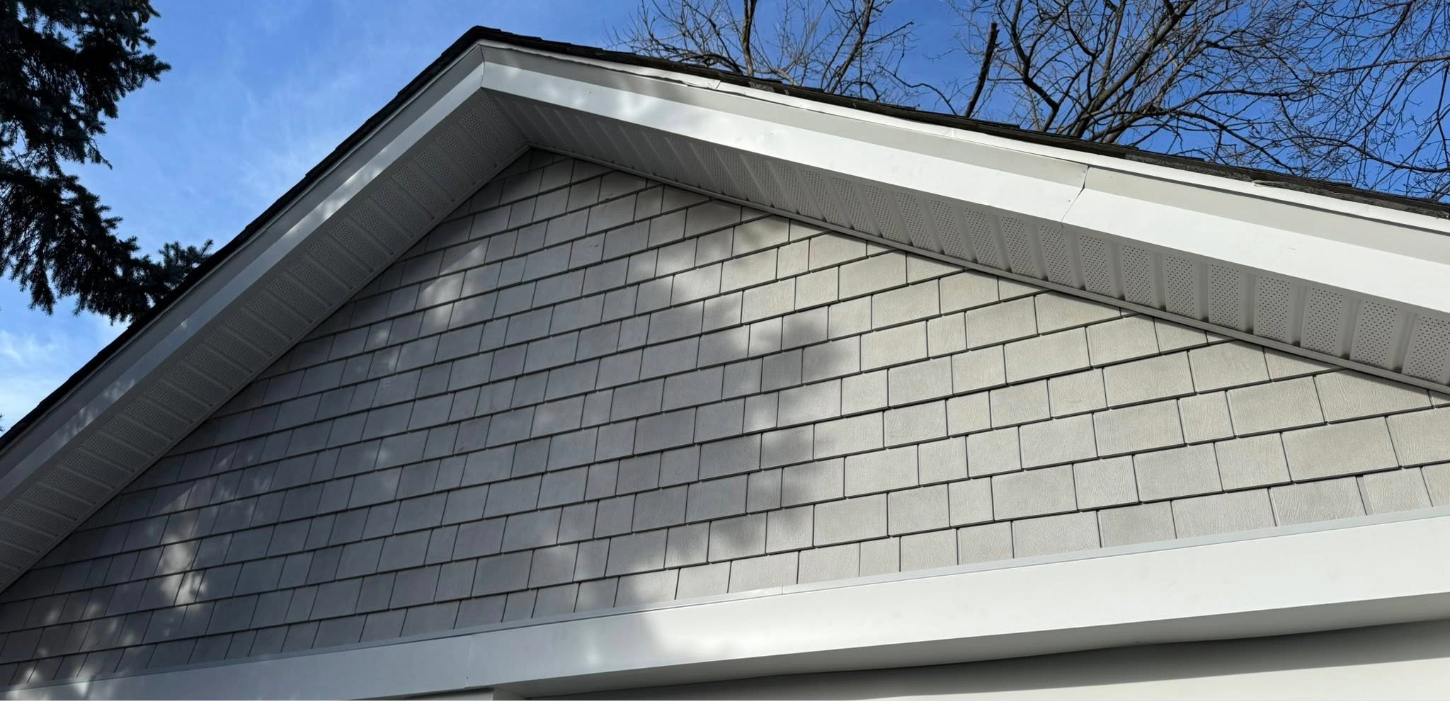
Gutters attach to the fascia board, the horizontal trim board running along the roofline edge. If the fascia has been compromised by moisture, rot, or pest damage, it cannot provide a secure anchoring surface for gutter hardware. Installing new gutters on deteriorated fascia produces a system that will pull away from the structure over time as the fasteners work loose from the softened wood, ultimately failing and potentially causing damage to the gutters and the surrounding area on the way down.
Before any house gutter installation, the condition of the fascia must be assessed. At Aaron Roofing Corp, we check fascia condition during our gutter consultation and address any deterioration before the new gutters go up. This protects your investment in the new system and ensures the installation performs as designed rather than failing prematurely because of the condition of what it was attached to.
Need help visualizing a specific color? Check out our online gallery to see how different gutter styles and finishes look on local homes.
What the Installation Process Looks Like
A professional gutter installation begins with a consultation and assessment of your current gutter system, roofline configuration, and drainage requirements. We determine the appropriate gutter size, material, and downspout placement to serve your specific property effectively.
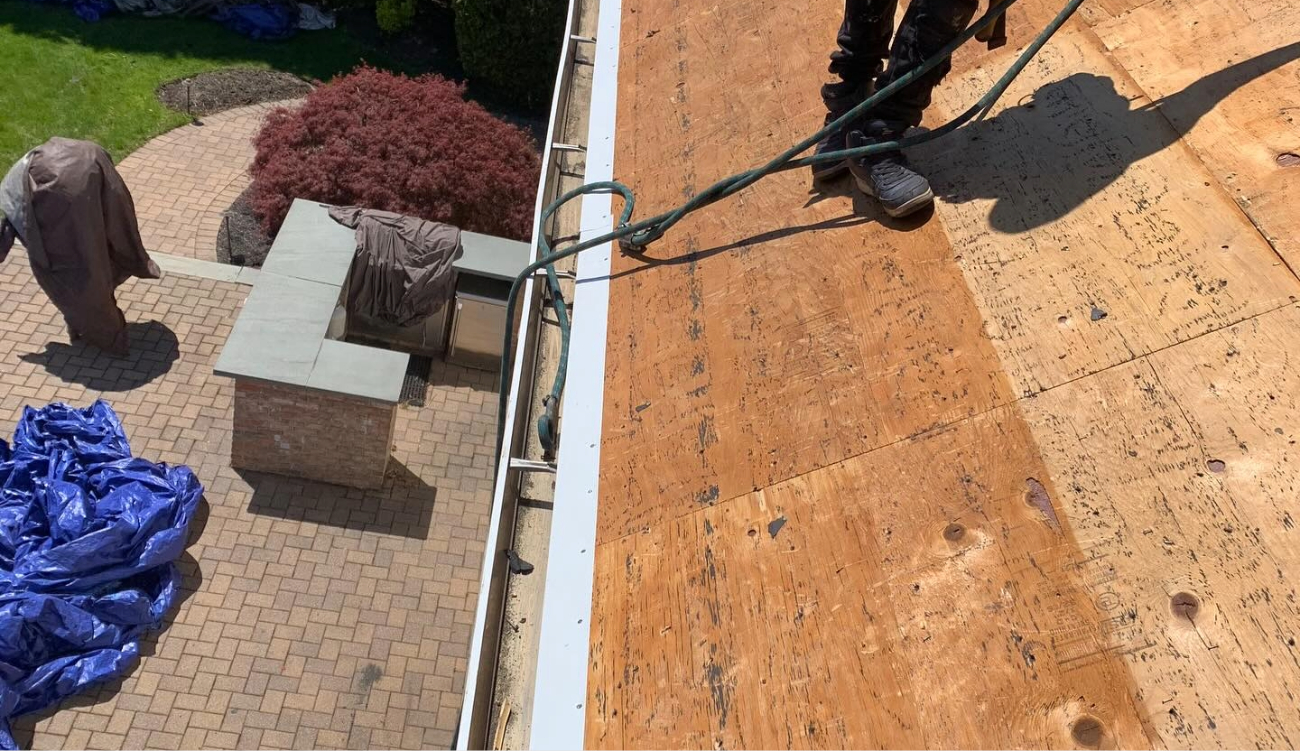
If existing gutters are being replaced, the old system is removed and the fascia is inspected and addressed as needed before new material is installed. The seamless gutter is fabricated on-site from aluminum stock to match the exact dimensions of your roofline sections, eliminating seams along the runs. Gutters are installed with proper pitch using hidden hangers at appropriate intervals to support the system under the loads it will encounter. Downspouts are sized and positioned to handle the volume each section of gutter collects. End caps and miters are sealed at corner connections. The completed system is tested with water to confirm proper flow and drainage before we consider the installation complete.
A final inspection and cleanup closes out the project, and we review the completed work with you to confirm your satisfaction.
Maintaining Your Gutters After Installation
A quality seamless gutter system requires relatively modest maintenance to deliver reliable performance for its full service life. The primary maintenance requirement is keeping the gutters free of debris that would impede water flow or add weight loading to the system. On Long Island, where oak and maple trees shed leaves through October and November, fall gutter cleaning is an essential annual task. A second cleaning in spring removes the debris that winter weather deposits.
Beyond cleaning, inspect gutters and downspouts after significant storm events for any sections that have shifted, pulled from the fascia, or sustained physical damage from debris or ice. Addressing these issues promptly prevents them from becoming larger problems. Inspect the downspout extensions at the beginning of each season to confirm they are directing water away from the foundation as intended. Gutter guards or covers can reduce the frequency of cleaning required but are not a maintenance-free solution. They filter debris rather than eliminating it entirely and still benefit from periodic inspection.
Whether you prefer seamless aluminum or durable copper, our Long Island services include a wide variety of high-quality gutter material options.
Frequently Asked Questions
How long do aluminum gutters typically last in Nassau County?
Quality aluminum gutters installed by a professional with proper pitch and fastening typically last 20 to 30 years in Nassau County’s climate. The longevity depends significantly on maintenance. Gutters that are cleaned regularly and inspected for damage after major storms will consistently reach the upper end of this range. Gutters that are neglected, allowed to hold debris and standing water, or subjected to physical damage that is not addressed promptly will deteriorate faster. The seamless construction eliminates the joint failures that most commonly shorten the life of sectional gutter systems.
Do gutters need to be replaced when getting a new roof?
Not necessarily, but it is worth evaluating. If the gutters are old, significantly corroded, or already performing poorly, combining gutter replacement with a roof replacement makes practical and economic sense because the roofline is already being accessed and the fascia is being inspected. If the gutters are relatively new and in good condition, they can typically be preserved through a roof replacement by a careful crew that reinstalls them after completing the roofing work. The decision should be based on an honest assessment of the gutter system’s condition rather than a default assumption either way.
What size gutters are right for my Nassau County home?
The appropriate gutter size depends on the roof area being drained, the pitch of the roof, and the rainfall intensity that the system needs to handle. For most standard residential applications in Nassau County, 5-inch K-style gutters are adequate. Homes with larger roof areas, steeply pitched roofs that accelerate water velocity, or multiple roof planes draining to a single section benefit from 6-inch gutters. A professional assessment of your specific roofline is the most reliable way to determine the right sizing for your property.
Can clogged gutters cause roof leaks?
Yes, through several mechanisms. Clogged gutters that overflow during rain events allow water to run behind the gutter and onto the fascia and the lower course of shingles, potentially working under the shingles and into the roof structure. In winter, debris-clogged gutters contribute to ice dam formation by trapping meltwater at the eaves where it refreezes. Ice dams force water under shingles and are one of the most common causes of water damage in Long Island homes during and after cold weather events. Keeping gutters clean and flowing freely is one of the most effective preventive measures against roof leak development.
Is it worth adding gutter guards to a new installation in Nassau County?
Gutter guards can meaningfully reduce the frequency of cleaning required and are worth considering, particularly for homes with significant tree coverage that deposits heavy debris loads. However, they are not maintenance-free and should not be evaluated on the premise that they eliminate cleaning entirely. The quality range among gutter guard products is wide, and the best performers use a mesh or microfiltration approach that blocks small debris while maintaining water flow. Cheaper foam or brush-type products can themselves trap debris and create maintenance issues. Discussing guard options with your installer, along with the specific tree coverage around your property, will help you make the right decision for your situation.
Protect Your Nassau County Home With the Right Gutter System
House gutter installation done correctly is one of the most protective investments a Nassau County homeowner can make for the long-term health of their property. A properly designed and installed seamless system controls water at every point around the roofline, protects the foundation and exterior from chronic moisture exposure, and prevents the accumulating damage that inadequate drainage causes quietly over years. Done poorly, gutters create a false sense of protection while failing at the joints, pulling from deteriorated fascia, and depositing water too close to the foundation to accomplish their purpose.
Aaron Roofing Corp installs seamless gutter systems across Long Island as part of our comprehensive exterior services, which also include roof replacement, roof repair, flat roofing, siding, and window replacement. Our team is fully licensed and insured, our owner is involved on every project, and every installation is backed by a written estimate and a thorough final quality check. We offer free inspections with no obligation.
Contact Aaron Roofing Corp today at 516-343-0382 or visit aaronroofingcorp.com to schedule your free consultation. We are ready to design and install a gutter system that protects your Nassau County home the way it deserves.